ResortConcierge AI Research · No. 01
The Guest Response Gap
What guests expect, what resorts deliver, and what the silence costs
On this page
- 01About this report
- 02Key findings: seven numbers from the gap
- 03What one unresolved problem costs
- 04What guests expect, by channel
- 05What properties actually deliver
- 06The peak-season squeeze
- 07After 10pm, who answers?
- 08Closing the gap
- 09Test your own property: the two-hour response check
- 10What operators are saying
- 11How we built this report
- 12About ResortConcierge AI
- 13Sources
About this report
When a guest reaches out, how long until someone answers, and what happens when no one does? That is the whole question of The Guest Response Gap, the first report in the ResortConcierge AI Research series.
It is written for GMs and owners of independent resorts with 40 to 400 rooms, and for the people who run their front desks, reservations and guest experience.
This edition gathers the most recent published evidence we could verify: industry studies, platform benchmarks, mystery shops, rating standards and operators' own words. Every figure was taken from a page we opened, then checked again in a separate pass that had not seen the draft. Vendor data is labeled as vendor data. Anything older than four years carries its year. Where the evidence is thin, we say so.
Inside you will find seven numbers worth knowing, six short chapters, a two-hour check you can run on your own property this week, and the full method and source list. The designed report, with the printable worksheet and scoring log, is free to download.
Key findings: seven numbers from the gap
The evidence points one way. Guests now expect a reply in minutes, a large share of their messages and calls arrive when no one is at the desk, and a meaningful slice of them get no answer at all.
217 points
How far guest satisfaction falls, on a 1,000 point scale, when something goes wrong during a stay. 12% of stays had a problem.
J.D. Power, 2025 North America Hotel Guest Satisfaction Index (branded hotels, 39,219 guests)
57%
Share of US consumers who expect a business to reply to a text within 15 minutes.
EZ Texting, 2025 consumer texting report (1,074 respondents, all industries)
4 in 10
Guest messages that arrive outside 9 to 5.
Akia, July 2026 (1.4 million guest messages, platform data)
26%
After-hours reservation calls that went straight to a standard voicemail box in a 2026 secret shop of 135 upscale hotels.
Revinate, 2026 Shopped Call Report (308 calls, vendor research)
64%
Callers to travel businesses who actually reach a person.
Invoca, 2026 travel benchmarks (platform data, hotels and cruise lines)
2%
Calls answered by a front desk agent in that same secret shop where the agent asked for the booking. Across all calls it was 22%.
Revinate, 2026 Shopped Call Report
1 in 3
Hospitality venues that never answered a mystery email. Only 22% replied within an hour.
Stampede, 2023 (hundreds of UK and Ireland venues, mostly food and beverage; vendor)
None of these come from independent resorts alone; that data does not yet exist in public. Read them as the clearest available view of the problem, not a census.
The full report
The Guest Response Gap
What one unresolved problem costs
A single problem during a stay costs more satisfaction than almost anything a property can add. In J.D. Power's 2025 study, guests who had a problem rated their stay 460 on a 1,000 point scale. Guests who didn't rated it 677. That is a 217 point fall, and 12% of stays had a problem.
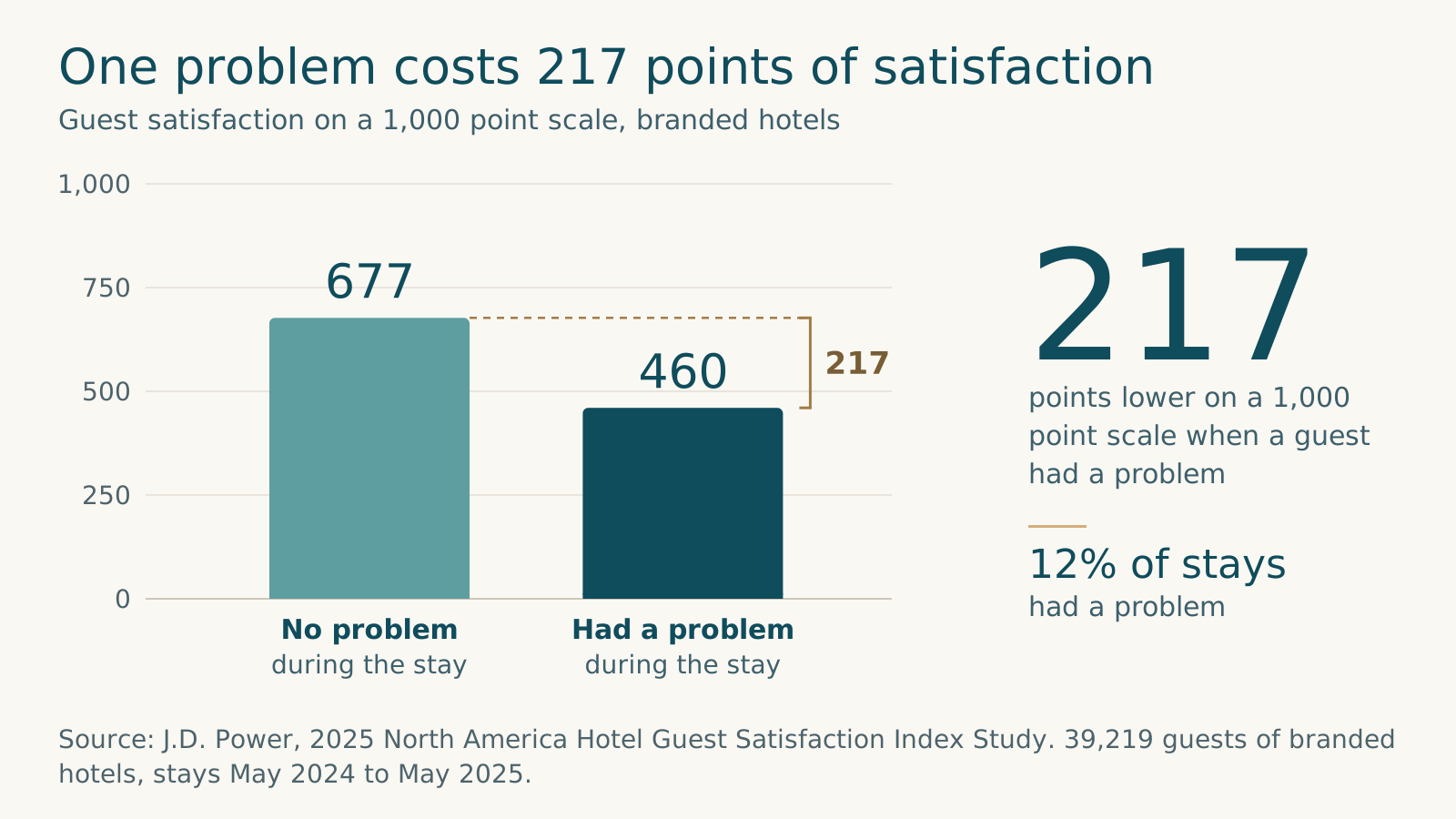
Figure 1. One problem costs 217 points of satisfaction. Source: J.D. Power, 2025 North America Hotel Guest Satisfaction Index Study, 39,219 guests of branded hotels.
The study covers branded hotels, not independents, so treat the exact gap with care. The shape is what matters. A broken air conditioner or a missing crib is not the damage on its own. The damage is the hour between the guest asking and someone answering, and the second hour if nobody says what happens next.
Responsiveness is also part of the cure. In its 2026 edition J.D. Power reported satisfaction up 13 points to 665, and credited part of the gain to staff courtesy and responsiveness to requests.
The cost runs past the stay. Hotels answered 68.8% of their online reviews in 2025, taking 3.5 days on average (Shiji, 40 million reviews, vendor data). An older study of TripAdvisor hotels found that properties which started replying to reviews went on to earn 12% more reviews and 0.12 more stars (Proserpio and Zervas, 2018). A reply to a review is a response too. It is just the last one, and the most public.
Then there is the inquiry that never becomes a booking. In a 2025 survey of 1,000 US consumers across all industries, 78% said they had given up on a business after an unanswered call, and 82% said they would call a competitor instead (CallRail, vendor survey). For an independent resort, the competitor is often the online travel agency (OTA) listing for the same room. OTAs took 63.4% of independent hotel bookings in Cloudbeds' 2026 data. An unanswered direct inquiry is the cheapest booking a resort can lose to one.
What guests expect, by channel
Guests now expect a text answered in minutes, a chat answered almost at once, an email the same day and a group inquiry within a few business days. Each channel runs on its own clock, and most properties run all of them through one desk.
Text and messaging. In a November 2024 survey of 1,074 US consumers, 57% said they expect a business to answer a text within 15 minutes (EZ Texting, all industries, vendor survey). A year earlier, the same company found 66% expected a reply within an hour. Guests are choosing the channel, too: 58% of travelers said they prefer SMS, WhatsApp or email links for quick exchanges with a property (eviivo, 2025, 430 travelers). The volume is real. Revinate's North American benchmark puts guest messaging at 993 texts a month, and 3,618 Hilton properties using Kipsu handled more than 10.5 million conversations in 2023 (Hilton and Kipsu).
Web chat. No current survey measures what hotel guests expect from website chat. The best older figure says half of consumers expect an instant reply when they use live chat (Leadferno, 2021, 2,000 respondents). Across industries, businesses on one chat platform average 35 seconds to first response (LiveChat, 2024). Chat sets the fastest clock of all, which is why an unstaffed chat box hurts more than having none.
Email and contact forms. Email still buys some time. No rating body or OTA publishes an email reply standard for hotels, but one platform rule gives a useful line: Airbnb counts any reply after 24 hours as late, and measures hosts on the share of new inquiries answered within 24 hours.
Group and event inquiries. Planners give the most room and judge the hardest. Most want an answer within four business days, and 24% name slow replies among the most frustrating parts of sourcing a venue (The 2026 Global Cvent Planner Sourcing Report, more than 1,650 planners surveyed in July 2025, vendor survey).
Phone. No modern study measures how long hotel callers will wait. The closest published yardstick is a rating standard: AAA's hospitality standards expect a hotel's service phone extension to be answered within three rings.
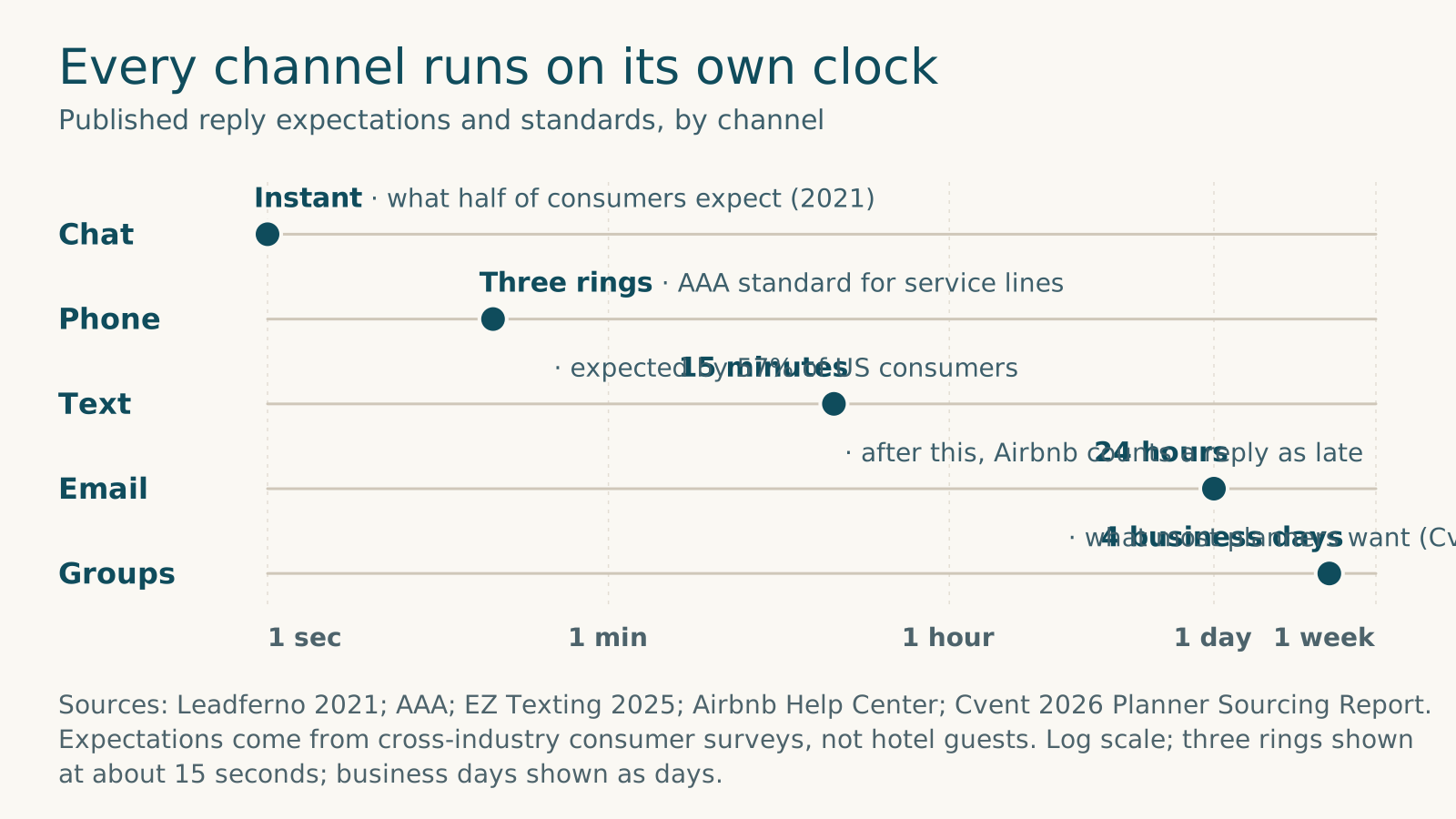
Figure 2. Every channel runs on its own clock. Sources: Leadferno 2021; AAA; EZ Texting 2025; Airbnb Help Center; Cvent 2026 Planner Sourcing Report. Expectation figures come from cross-industry consumer surveys, not hotel guests.
What properties actually deliver
Every published test of hospitality responsiveness we could find lands in the same place: a large share of guest inquiries never get a reply, and many of the replies that do arrive come late or skip the question.
Email. In 2023, Stampede sent the same simple question (could a guest bring a birthday cake?) to hundreds of venues in the UK and Ireland, most of them restaurants and bars; QSR Media's coverage puts the count at 250. 22% replied within an hour and 60% within a day. A third never replied at all. Fewer than 5% sent an automatic acknowledgment, and fewer than 15% of the venues that answered tried to take a booking.
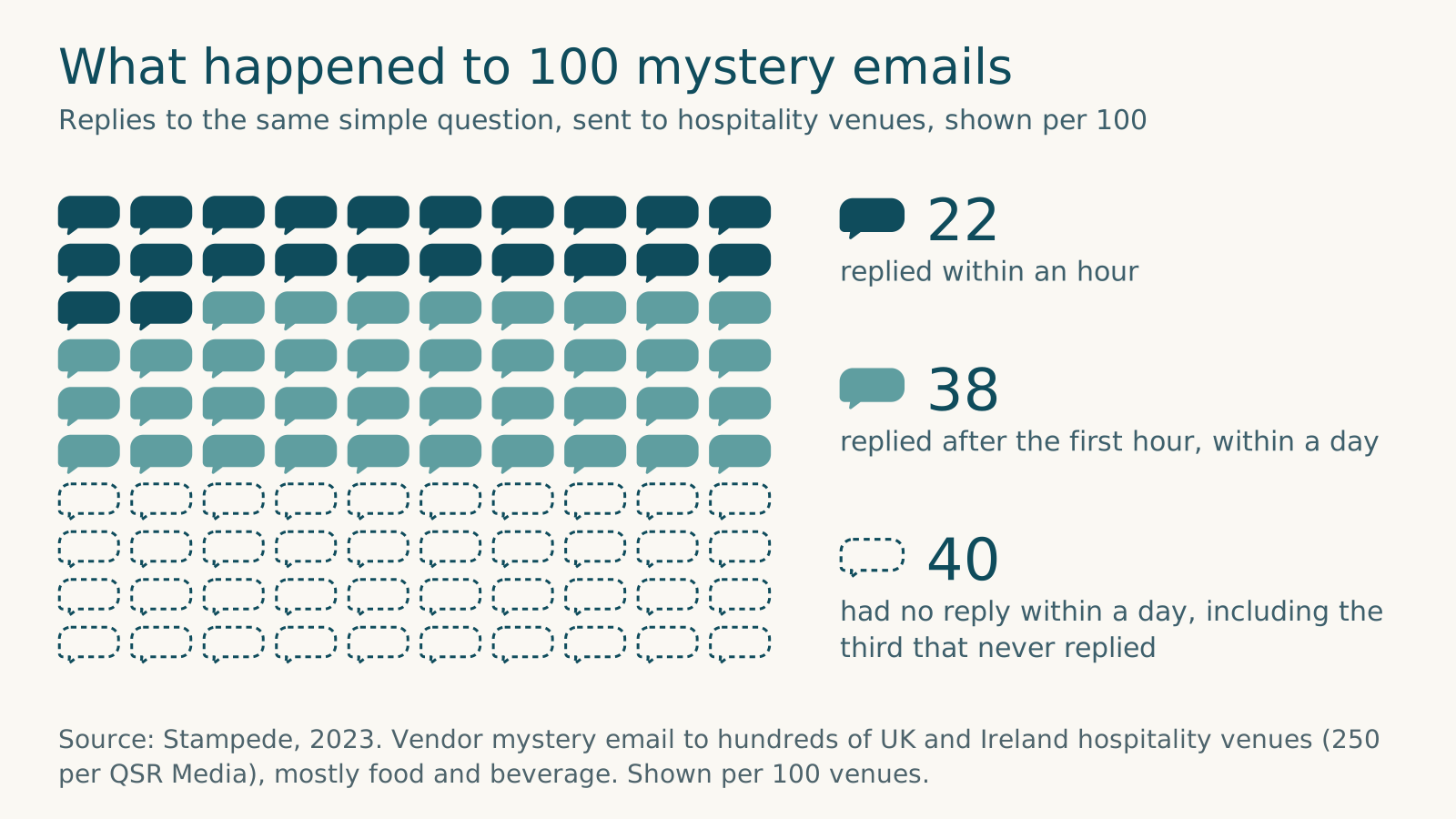
Figure 3. What happened to 100 mystery emails. Source: Stampede, 2023, vendor mystery email to hundreds of UK and Ireland hospitality venues (250 per QSR Media), mostly food and beverage. Shown per 100 venues.
Hotels have been tested the same way for two decades, and the pattern holds. A 2004 test of 116 lodging properties in southern Brazil got replies from 66% within 13 days; a third never answered, and only 23% of the replies answered all four questions the guest asked (Oliveira and colleagues, 2006). In a larger US study, Harvard and University of Virginia researchers emailed concierges at nearly 6,000 hotels asking for restaurant recommendations. Reply rates ran from 36% to 43% depending on the sender's name, which is its own finding (Feldberg and Kim, preliminary results reported in 2022). Group business fares no better: when a research institute sent an event inquiry to 167 upscale hotels, 30% never responded and only 15% made a tailored offer (IFH, 2010).
Phone. Call data shows fewer outright misses but plenty of leaks. Across travel businesses, 64% of callers reach a person (Invoca, 2026, platform data covering hotels and cruise lines). An older analysis of 5.8 million calls to 13 hotel brands, placed in the US in 2017, found 14% of calls failed: unanswered, or abandoned in a phone menu, voicemail, hold or transfer (Marchex, 2018).
The sharpest recent look comes from a 2026 secret shop of 308 reservation calls to 135 luxury and upscale hotels (Revinate, vendor research). When a call was answered, the person often treated it as a question rather than a sale:
- 56% of calls included no discovery questions at all: no dates, no occasion, no party size.
- 22% included a direct ask for the booking.
- When the front desk answered rather than a reservations team, 74% asked no discovery questions and fewer than 2 in 100 asked for the booking.
That last line is the one for independent resorts, where the front desk often is the reservations team.
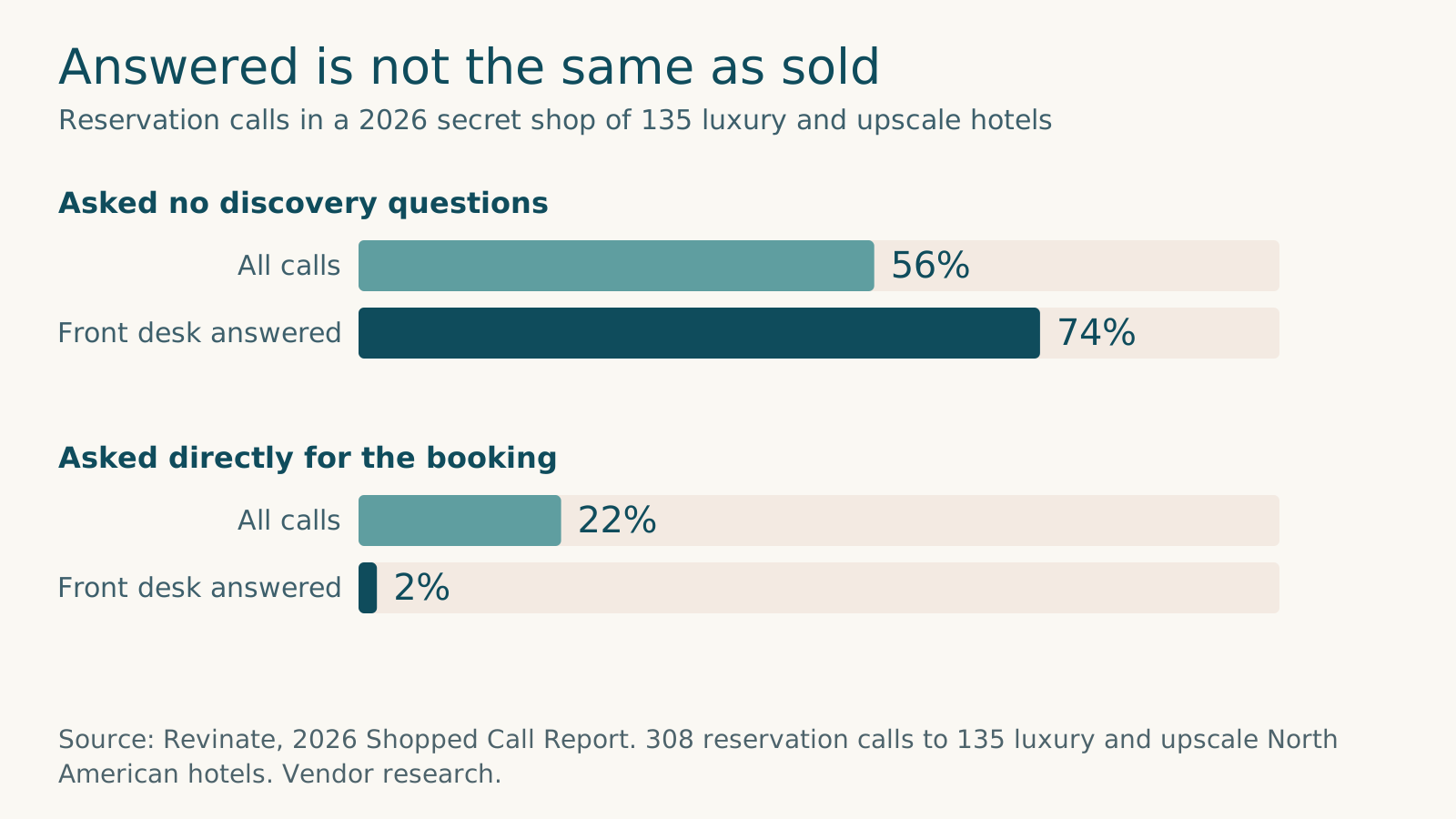
Figure 4. Answered is not the same as sold. Source: Revinate, 2026 Shopped Call Report, 308 reservation calls to 135 luxury and upscale North American hotels. Vendor research.
Messaging. Text is the bright spot. Revinate reports staff resolving guest inquiries in about three minutes on its platform, and automated replies in 1.8 seconds (global data). Website chat is where it tends to break. In one vendor's data on short-term rental managers, onsite chat got an answer only 46% of the time, against 93% for text and WhatsApp (Yada, 2023; rental managers, not hotels).
The peak-season squeeze
The gap is widest exactly when it costs the most. Guest contact nearly doubles in high summer, and the share of calls that turn into bookings slips at the same time.
Revinate's North American benchmarks show inbound calls per room peaking at 16.1 in July and bottoming out at 8.9 in February. Guest texts follow the same curve: 1,308 a month in July against 710 in December. Meanwhile, lead calls convert at 44% to 46% in summer, against 49% to 53% in winter and spring.
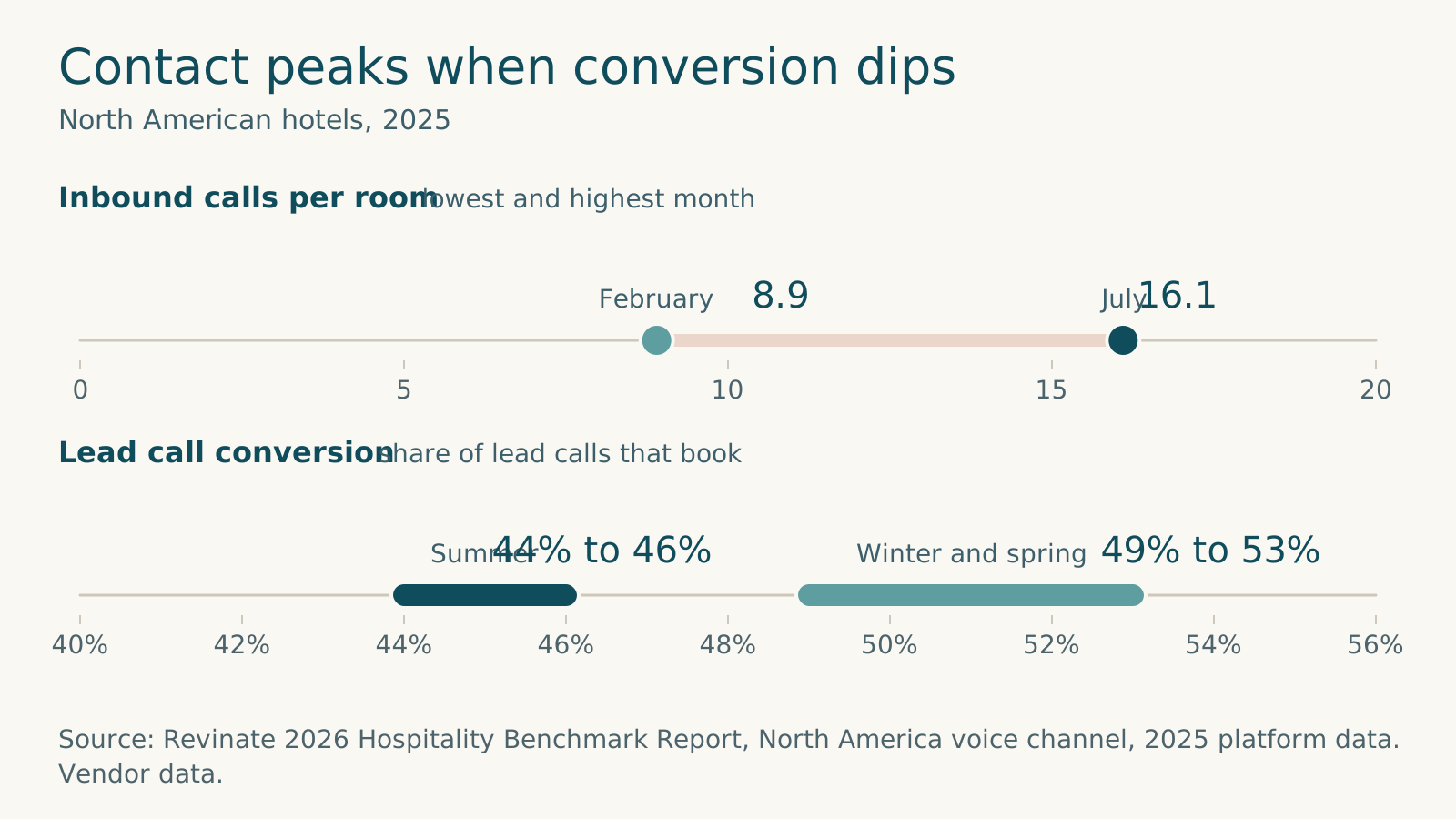
Figure 5. Contact peaks when conversion dips. Source: Revinate 2026 Hospitality Benchmark Report, North America voice channel, 2025 platform data. Vendor data.
The data can't prove why conversion dips, but the simplest explanation is capacity. The same desk takes nearly twice the contact, so each caller gets less of someone's attention. Staffing makes that harder, not easier. In early 2025, 65% of US hotels reported staffing shortages, and front desk roles were the second hardest to fill after housekeeping (AHLA, 282 hoteliers). A year later, more than half of hoteliers still described themselves as somewhat or severely understaffed (AHLA, March 2026).
For a resort, peak season is also when guests are most likely to be first-time visitors with questions: directions, parking, pool hours, whether the kids' club takes a four-year-old. Most of those questions repeat. That is where a well-run property decides what the desk answers and what it doesn't have to.
After 10pm, who answers?
A large share of guest contact arrives after the day team goes home, and the night is when the most stressful requests happen. At many properties, the honest answer to "who answers after 10pm?" is one night auditor, a voicemail box, or nobody.
What arrives. Akia analyzed 1.4 million guest messages over 30 days and found about 4 in 10 arrived outside 9 to 5, local time. HelloShift's platform data puts roughly one in six guest texts between 7pm and 7am, and about a quarter of calls outside 8am to 6pm. The two vendors define the window differently, but both describe a desk that gets real volume after the day shift leaves.
What it is about. The night brings different problems. Between 9pm and midnight, Wi-Fi problems ran at 1.9 times their normal share of messages and lockouts at 1.7 times, while complaints rose less than you might expect, at 1.3 times (Akia). Lockouts peak between 11pm and 2am. These are not questions that can wait for the morning team.
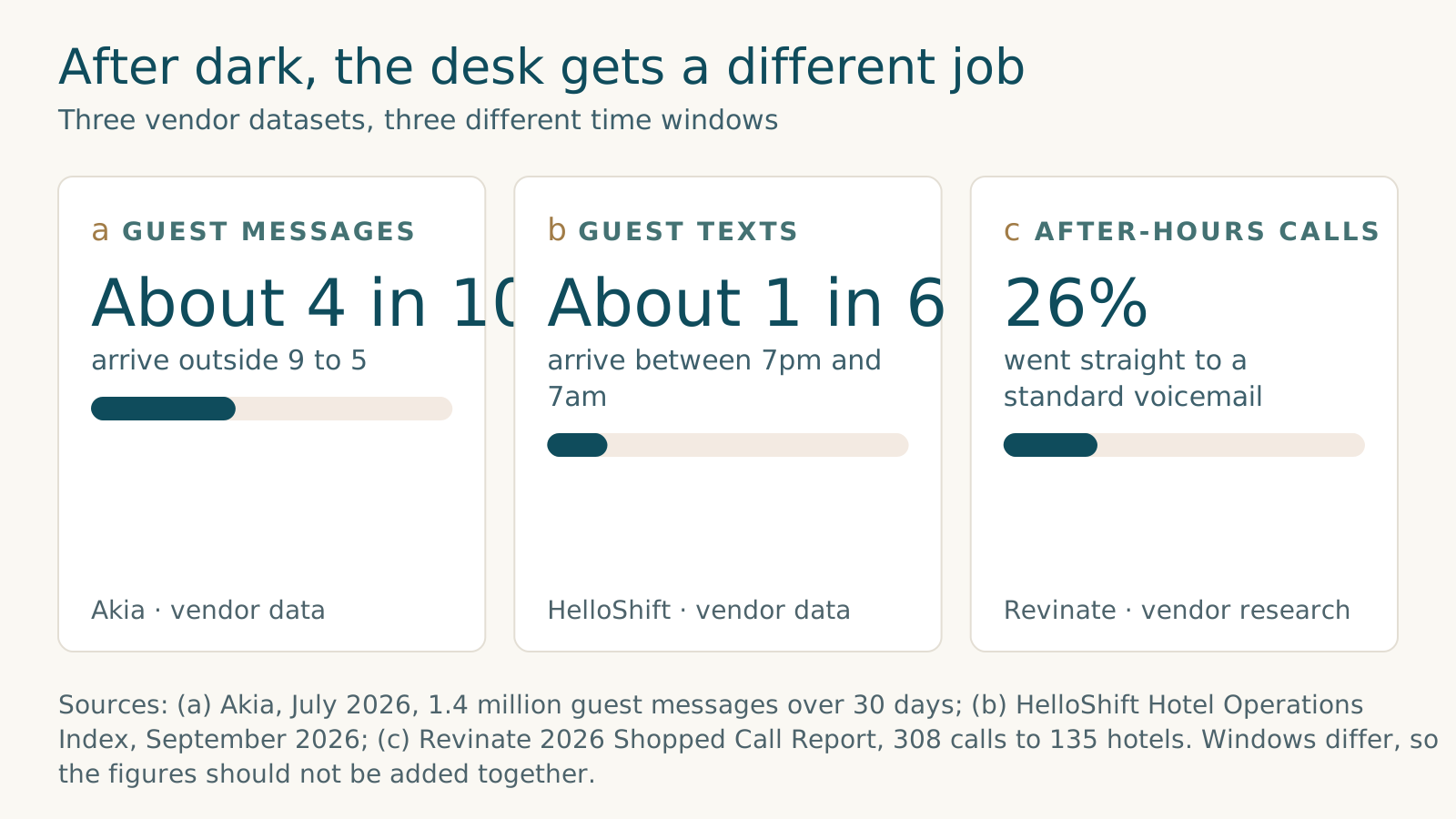
Figure 6. After dark, the desk gets a different job. Sources: Akia, July 2026; HelloShift Hotel Operations Index, September 2026; Revinate 2026 Shopped Call Report. Windows differ, so the figures should not be added together.
Who is there. Across all of leisure and hospitality, only 6.5% of workers usually work a night shift and 20.3% an evening shift (US Bureau of Labor Statistics, 2024 to 2025). That figure includes restaurants, so it isn't a front desk count, but it shows how thin the overnight bench is across the industry.
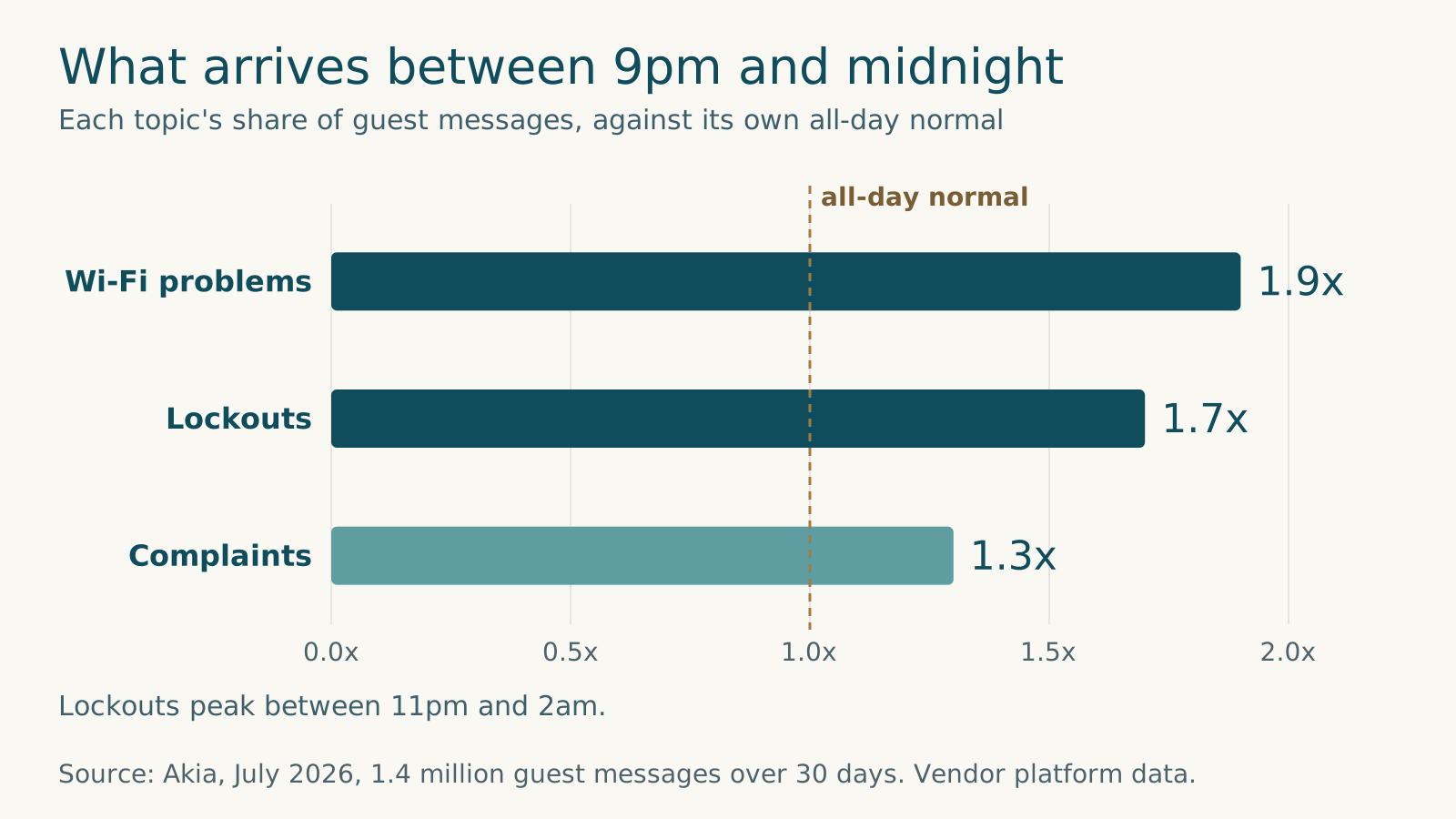
Figure 7. What arrives between 9pm and midnight. Source: Akia, July 2026, 1.4 million guest messages over 30 days. Vendor platform data.
What callers hear. In Revinate's 2026 secret shop, 26% of after-hours reservation calls dropped straight into a standard voicemail box. A guest ready to book at 10:30pm hears a beep and no promise of a callback.
What the standards say. The rating bodies are clear that someone must be reachable. AAA requires every approved property to provide "a responsible representative readily accessible at all times to address guest needs or requests" and "24-hour access to communications for emergency or critical information." Europe's Hotelstars Union makes 24-hour guest assistance, digital or by phone, a criterion at every star level.
Three rules for the overnight desk
- Every after-hours message gets an acknowledgment with a time. AAA's guidelines say requests should be acknowledged with an expected fulfillment time. "We'll have this sorted by 8am" is a complete answer at 11pm.
- Urgent goes to a person in minutes; routine waits with a promise. Lockouts, safety and medical issues route to whoever is on duty, with a phone number that rings. Pool hours and checkout times can be answered automatically or the next morning.
- No reservation call ends in a plain voicemail. Capture the caller's name and number, say when someone will call back, and keep that promise first thing.
Closing the gap
Closing the gap is less about answering faster at every hour and more about never leaving a guest without a next step. Three clocks start every time a guest reaches out. Most properties only watch the first one.
- Acknowledge. The guest knows a person, or a system speaking for one, has heard them, and when to expect more.
- Resolve. The towels arrive, the question is answered, the booking is made. Resolution should happen when you said it would.
- Verify. Someone checks it went right. A one-line follow-up ("Did the towels make it up?") turns a fixed problem into a good memory, and it is the clock most often skipped.
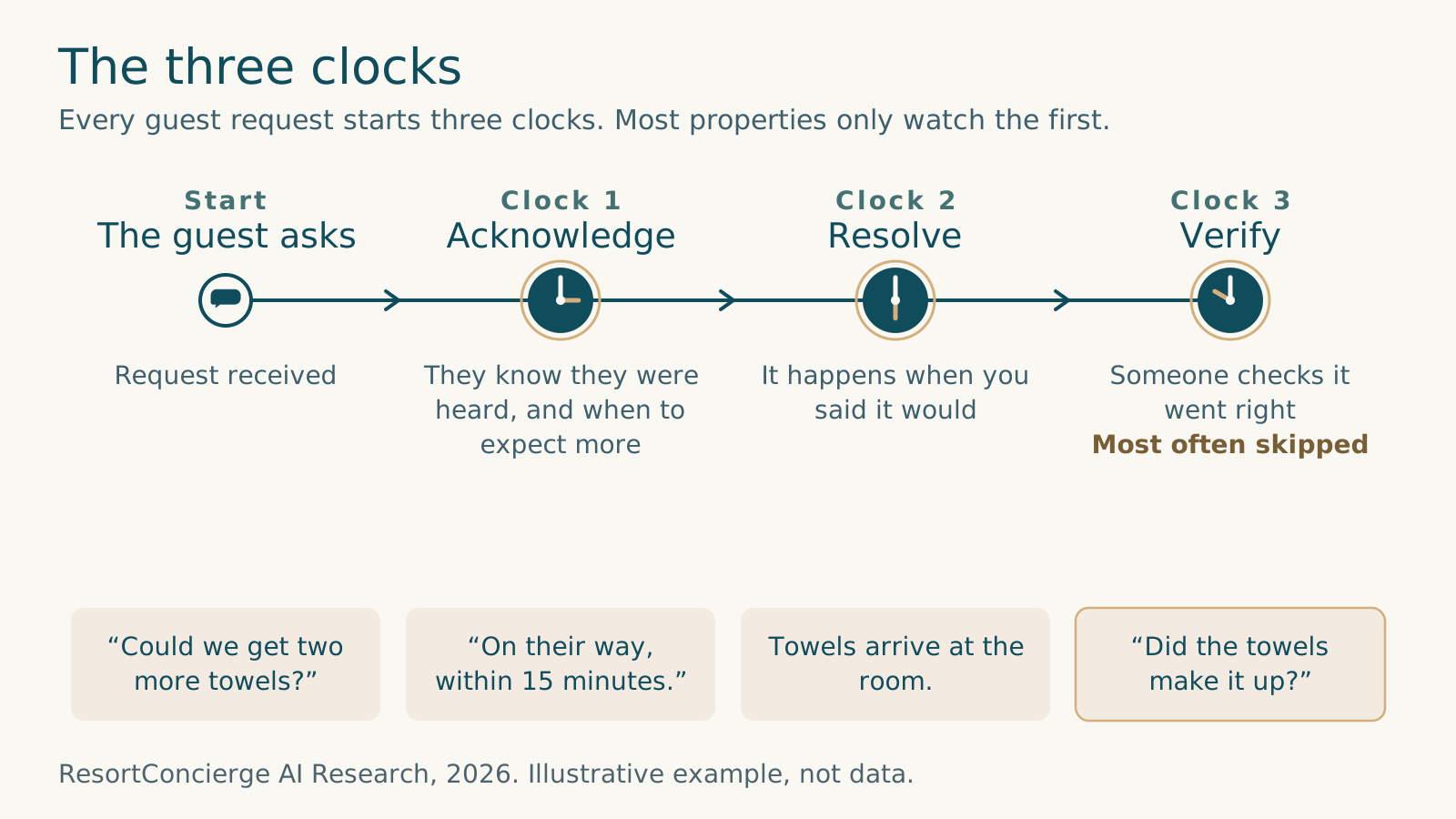
Figure 8. The three clocks. Illustrative example, not data.
Response targets by channel
No single body sets response standards for every channel, so the targets below borrow the clearest published line for each. Treat them as a starting point to adapt, not an industry rule.
| Channel | Acknowledge within | Where the line comes from |
|---|---|---|
| Phone | Three rings, to a person or a useful menu | AAA hospitality standards, written for service lines |
| Text and WhatsApp | 15 minutes | What 57% of consumers expect (EZ Texting, 2025) |
| Website chat | Instantly, with a person available or a clear handoff | Half of consumers expect an instant chat reply (Leadferno, 2021) |
| Email and web forms | Same business day, never later than 24 hours | Airbnb counts replies after 24 hours as late |
| Group and event inquiries | Within four business days | What most planners want (The 2026 Global Cvent Planner Sourcing Report) |
| Anything after hours | Immediately, with a time for the full answer | AAA: acknowledge requests with an expected fulfillment time |
Measure it the way guests feel it
Most properties can't see their own response times. Start with three numbers, reviewed weekly: time to first reply on each channel, the share of contacts with no reply after 24 hours, and both split by time of day. The after-hours split is usually where the surprise is.
Automation can carry the routine load. Revinate reports automated replies resolving guest inquiries in 1.8 seconds, against three minutes for staff, and automation now handles 31% of guest messages globally. Operators who adopted automated messaging report fewer calls reaching the desk (see What operators are saying). The guardrail is the same one any good night manager uses: anything urgent, emotional or unusual goes to a person, quickly, with the context already gathered.
Self-check
How does your property measure up?
Seven quick questions, scored against the clearest published line for each channel from Chapter 6. It takes about a minute, and nothing you enter is saved.
- Phone, during the day: how quickly does a guest reach a person or a useful menu?
- Text or WhatsApp: how long until a guest gets a first reply?
- Website chat: what happens when a guest starts a chat?
- Email and web forms: when does a guest usually hear back?
- Group and event inquiries: how fast do you respond?
- After 10pm, a guest sends a message. What happens?
- After 10pm, someone calls to book. What happens?
Test your own property: the two-hour response check
You can measure your own gap this week with a phone, a personal email address and about two hours spread over three days. The steps below copy the methods used in the published studies in this report, so your results can sit next to theirs.
Before you start. Use a personal email and phone number your team won't recognize. Don't make or hold a booking, and keep every contact short and polite. Do not record phone calls; many US states require everyone on a call to consent. If you test competitors as well, thank them and close the thread when you're done.
1. Send one email and one web-form inquiry at 2pm on a weekday. Ask four things in one short message, the way the Brazilian hotel study did: availability for two nights about three weeks out, whether a child can share the room, the rate, and how to book. Note the exact send time.
2. Send the same question by text or WhatsApp, and through website chat, at 10:30pm. Use whatever channels your website advertises. Note the send time and whether a person, an automatic reply or nobody answers.
3. Call twice: once at 2pm and once after 10pm. Count the rings to a live person. Note whether you reached a person, a menu, a voicemail or a transfer. Ask a simple availability question and see whether the person asks about your dates or the occasion, and whether they offer to book.
4. Wait 72 hours, then score each contact. The scoring log in the PDF sets your results next to the published benchmarks.
The full report
The Guest Response Gap
What operators are saying
Operators who have changed how they answer guests mostly describe the same thing: fewer calls reaching an overloaded desk, and staff time handed back to the guests in front of them. The quotes below are from published sources. Most come from vendor case studies, which means the property is that vendor's customer; we say which.
Trapp Family Lodge, Stowe, Vermont (independent, family-owned resort, 96 keys). Monica Daubenspeck, revenue and reservations manager: "Answering phones all day quickly leads to burnout." And: "AI Webchat handles 500 messages a week for us. It's reduced call volume by 30% and our employees are much happier." The case study reports average message response time falling from about nine minutes to under 30 seconds. Source: Canary Technologies customer story. Vendor case study.
Hotel Zephyr, San Francisco (boutique, 361 keys). Joyce Yun, general manager: "We've seen a noticeable reduction in phone calls reaching our staff." Source: Canary Technologies customer story. Vendor case study.
Paradise Resort Gold Coast, Australia (family resort). Tia Sadler, reservations manager: "we never miss an inquiry." The case study reports 531 bookings driven by its chatbot in under six months, 85% of them fully automated, worth more than AUD 750,000 in direct revenue. Source: Hotel Tech Report success story, checked with the property. Vendor: HiJiffy.
The Foreside Inn, Kittery, Maine (boutique, 24 rooms, planned to open in August 2026 without a traditional front desk). Owner Taylor McMaster: "The reality is that modern technology in 2026 enables a 24/7 remote concierge, and all the services that one would expect from a front desk..." The inn had not opened when he said it, so this is a plan, not a result. Source: Hotel Dive, July 2026. Editorial.
For balance: Magic Moment Resort and Kids Club, Kissimmee, Florida. Owner and CEO Carina Radonich, on piloting an AI concierge: "When you eliminate the personal touch, you eliminate the emotional part of the connection..." Source: Hotel Dive, May 2026. Editorial.
The common thread isn't technology for its own sake. It is deciding which questions a person must answer and making sure a person is free to answer them.
How we built this report
This edition is a synthesis of published evidence.
What we looked for. Published studies, platform benchmarks, mystery shops, rating standards and platform rules that measure how fast hospitality businesses answer guests, what guests expect, and when guest contact arrives. We preferred work published from 2022 to 2026 and kept older studies only where nothing newer exists. Those carry their year.
How we checked it. Every figure was taken from a source page that was opened and read, not from a search result or a secondhand summary. A separate verification pass, run without sight of the draft, then rechecked each figure and quote against its source. We dropped widely repeated claims we could not trace to a primary source, including several common statistics about hotel response times and OTA reply rules.
How to read it.
- Vendor data is labeled. Much of the best recent data comes from technology companies' platforms and research teams. It is real data, but it describes their customers or the properties they chose to test, not the whole industry.
- Most samples are branded, upscale or mixed hospitality, not independent resorts alone. No public dataset isolates independents with 40 to 400 rooms.
- Definitions differ. "After hours" means outside 9 to 5 in one source and 7pm to 7am in another. We say which in every case and never add figures from different sources together.
- Consumer expectation figures come from cross-industry consumer surveys, mostly of US consumers, not hotel guests specifically. We found no current survey of hotel guests on reply speed by channel; that is a gap worth closing.
Sponsor. This report is published by ResortConcierge AI, which makes guest communication software for independent resorts. The product appears only in the About section and the closing invitation.
About ResortConcierge AI
Independent resorts lose guests in the gap between a question and an answer, usually when the desk is busiest or empty. ResortConcierge AI is an AI concierge built for those properties: it helps answer routine guest questions, routes service requests to the right team and flags unhappy guests early, all in one shared inbox, so staff can spend their time on the guests in front of them.
Want to know how your property responds?
We'll run the two-hour check in this report on your property, privately, and walk you through the results in 20 minutes.
Get the next report first
ResortConcierge AI Research publishes on the operating questions independent resorts ask most. One email when each report is out.
Frequently asked questions
How fast do guests expect a reply to a text message?
In a November 2024 survey of 1,074 US consumers across all industries, 57% said they expect a business to answer a text within 15 minutes (EZ Texting, 2025 report). No current survey isolates hotel guests.
How many guest messages arrive after hours?
Akia's analysis of 1.4 million guest messages found about 4 in 10 arrived outside 9 to 5, local time. HelloShift's platform data puts roughly one in six guest texts between 7pm and 7am. The two vendors define the window differently.
What happens to after-hours reservation calls?
In Revinate's 2026 secret shop of 135 luxury and upscale hotels, 26% of after-hours reservation calls went straight to a standard voicemail box.
How much does one unresolved problem cost in guest satisfaction?
In J.D. Power's 2025 North America Hotel Guest Satisfaction Index, guests who had a problem rated their stay 460 out of 1,000, against 677 for guests who did not: a 217 point fall. The study covers branded hotels.
What response time should a resort aim for on each channel?
No single body sets a standard for every channel. Borrowing the clearest published line for each: phone within three rings, text within 15 minutes, website chat instantly with a path to a person, email the same business day and never later than 24 hours, group inquiries within four business days, and anything after hours acknowledged immediately with a time for the full answer.
Is this report based on independent resorts only?
No. No public dataset isolates independent resorts with 40 to 400 rooms. The report draws on branded, upscale and mixed hospitality data and labels vendor data as vendor data.
Sources
All pages opened October 17, 2026. Vendor means the publisher sells hospitality or communications technology.
- AAA, Approval Requirements and Diamond Rating Guidelines for Lodging (undated; uploaded 2019)
- AHLA, 65% of surveyed hotels report staffing shortages, February 2025, 282 hoteliers, with Hireology
- AHLA via Hotel Management, Hotels face rising costs and staffing strains, March 2026, 246 hoteliers
- Airbnb Help Center, response rate and response time and Superhost requirements
- Akia, The night shift: 1.4 million guest messages, July 15, 2026 (vendor)
- Booking.com Partner Help, Contacting guests
- CallRail, Missed calls cost businesses more than ever, September 2025, 1,000 US consumers (vendor)
- Canary Technologies, Trapp Family Lodge and Hotel Zephyr customer stories (vendor)
- Cloudbeds, 2026 hotels report, March 2026, 90 million bookings (vendor)
- Cvent, The 2026 Global Cvent Planner Sourcing Report, October 2025, more than 1,650 planners (vendor)
- eviivo, traveler communication preferences survey, November 2025, 430 travelers (vendor)
- EZ Texting, 2025 consumer texting behavior report, January 2025, 1,074 respondents, and 2024 consumer texting report, 1,602 respondents (vendor)
- Feldberg and Kim via HBS Working Knowledge, How racial bias taints customer service, February 2022 (academic, preliminary)
- HelloShift via Hotel Tech Report, Hotel Operations Index, September 2026, and AI voice agent data, June 2026 (vendor)
- Hilton via Hospitality Net, Hilton expands on-property messaging, January 2024 (brand with vendor Kipsu)
- Hotel Dive, Maine hotel operating without a front desk, July 2026, and AI concierge at a Wyndham resort, May 2026
- Hotel Tech Report, Paradise Resort Gold Coast success story (vendor: HiJiffy)
- Hotelstars Union, Classification criteria 2025 to 2030, April 2024
- IFH Institute via TravelMole, Hotels missing out on MICE business, September 2011, 167 hotels
- Invoca, Travel lead conversion benchmarks report 2026, July 2026 (vendor)
- J.D. Power, 2025 North America Hotel Guest Satisfaction Index (NAGSI) Study, July 2025, 39,219 branded-hotel guests; 2026 study via LODGING, July 2026, 44,787 guests
- Leadferno, Survey: response times for texts vs live chat, August 2021, 2,000 respondents (vendor)
- LiveChat, Customer service report, 2024 (vendor)
- Marchex Institute, Hotel and cruise call study, July 2018, 5.8 million calls in 2017 (vendor)
- Oliveira, Oliveira and Abdala, E-mail responsiveness of lodging in Serra Gaúcha, REAd, 2006, 116 properties (academic)
- Proserpio and Zervas via Harvard Business Review, Replying to customer reviews results in better ratings, February 2018 (academic)
- QSR Media, One out of three customers don't get a reply, May 2023
- Revinate, We secret shopped 135 hotels, August 2026, and after-hours call infrastructure, August 2026 (vendor research)
- Revinate, North America messaging benchmark and voice benchmark, 2026 Hospitality Benchmark Report (vendor)
- Shiji, Global guest experience benchmark, January 2026 (vendor)
- Stampede, The hospitality industry is leaving money in their inbox, May 2023 (vendor)
- US Bureau of Labor Statistics, Workers by shift usually worked, 2024 to 2025, September 2026
- Yada via Guesty, Response times in short-term rentals, November 2023 (vendor)