ResortConcierge AI Research · No. 02
AI at the Front Desk
What guests accept, what operators are actually doing, and the rules that now apply

On this page
- 01About this report
- 02Key findings: eight numbers on where AI belongs
- 03Guests want AI in the background and a person at the moments that matter
- 04Guests want to be told it is AI, and to see the way to a person
- 05Adoption is wide, measured impact is thin
- 06Accuracy decides whether AI helps or hurts, and the business owns the answer
- 07The disclosure rules are now concrete
- 08A narrow, disclosed rollout for a 40 to 400 room resort
- 09Test your own property: the one-hour AI readiness check
- 10What operators are saying
- 11How we built this report
- 12About ResortConcierge AI
- 13Sources
About this report
Should an independent resort put artificial intelligence (AI) in front of its guests, and if so, on what terms? That is the question of AI at the Front Desk, the second report in the ResortConcierge AI Research series. The evidence answers it fairly clearly. Guests accept AI on routine questions and want a person when something matters. Whether an assistant helps or hurts depends on whether its answers are right and whether guests know what they are talking to.
It is written for general managers (GMs) and owners of independent resorts with 40 to 400 rooms, and for the front office and guest experience leads who will live with the decision.
This edition draws on guest surveys, operator studies, vendor platform data, academic research, legal decisions and the text of the rules themselves. Each figure was taken from a source page that was opened and read, and then checked again in a separate pass by a checker who had no hand in writing the report. Where a figure was read in a republication rather than the original, the text or the Sources entry says so ("via"). Vendor data is labeled as vendor data. Older studies carry their year. Where the evidence is thin, including on how often AI gets resort facts wrong, we say so.
Inside: eight numbers worth knowing, six chapters, a one-hour readiness check for your own property, and the full method and sources. The designed report, with the printable scoring sheet, is free to download.
Key findings: eight numbers on where AI belongs
Guests want AI on routine work and a person for the rest, and they want to know which one they are dealing with. Hotels have adopted AI widely, but few can show a return. When an assistant gets something wrong, the business that deployed it owns the mistake.
89%
Guests who want a balanced mix of AI and human-led hospitality, or AI only in the background on repetitive tasks.
Mews, October 2026 (3,250 travelers in eight countries, surveyed July 2026; vendor)
9 of 9
Hotel touchpoints where guests preferred a human. Mews published five; even arranging a taxi went 44% human, 28% AI.
Mews, same survey (vendor)
2% vs 40%
Share willing to hand bookings to AI: 2% of respondents when asked about giving an AI tool "full autonomy" to "make and modify travel bookings without human oversight," 40% when asked if they "would let an AI assistant handle flight and hotel bookings on their behalf." Five surveys asked; read them side by side, never averaged.
Skift via McKinsey, September 2025 (2%); Phocuswright, July 2026 (40%); samples not stated
55%
Consumers who trust AI customer service when a clear human contact option is offered, against about a quarter without one.
Five9 data reported by CX Dive, July 2026 (3,000 consumers; vendor)
Over 60%
US travelers who name the accuracy of information as a barrier to AI travel planning tools, the most cited.
Cornell Center for Hospitality Research, April 2026 (1,029 US travelers; academic)
$812.02
What a tribunal ordered Air Canada to pay after its chatbot gave a passenger wrong fare advice (the decision names no currency). "It makes no difference whether the information comes from a static page or a chatbot."
Moffatt v. Air Canada, 2024 BCCRT 149, February 2024 (tribunal decision)
13%
Hotel chains that report measurable return on investment (ROI) from AI so far, though 91% use it.
h2c AI Opportunity Study, October 2026 (113 chains; consultancy, vendor-sponsored)
27%
Engaged callers to a hotel AI voice agent who wanted to reach a person, the most common request.
HelloShift via Hotel Tech Report, June 2026 (platform data, hand-reviewed sample, size not stated; vendor)
These figures come from multi-country guest surveys, chain studies, vendor platforms and a few legal cases. None isolates independent resorts, and much of the best recent data is vendor data. Read them as the clearest available view, not a census.
The full report
AI at the Front Desk
Guests want AI in the background and a person at the moments that matter
Guests are not against AI. They sort tasks by what is at stake: routine work can go to a machine, while the welcome and anything that has gone wrong should stay with a person. How far they will let AI act for them depends on how the question is asked.
Guests chose a person at every touchpoint tested. In a July 2026 survey of 3,250 travelers in eight countries, including the US and the UK, 89% wanted either a balanced mix of AI and human-led hospitality or AI only in the background on repetitive tasks, and 75% said good hospitality depends on human staff (Mews, October 2026, vendor). Mews reports that guests preferred a human at all nine touchpoints it tested, and published figures for five: bar and restaurant service 72% human, front desk welcome 66%, check-in and key 58%, room service orders 50% human to 23% AI, and arranging a taxi 44% human to 28% AI. The other four touchpoints were not published, and neither were country or regional splits.
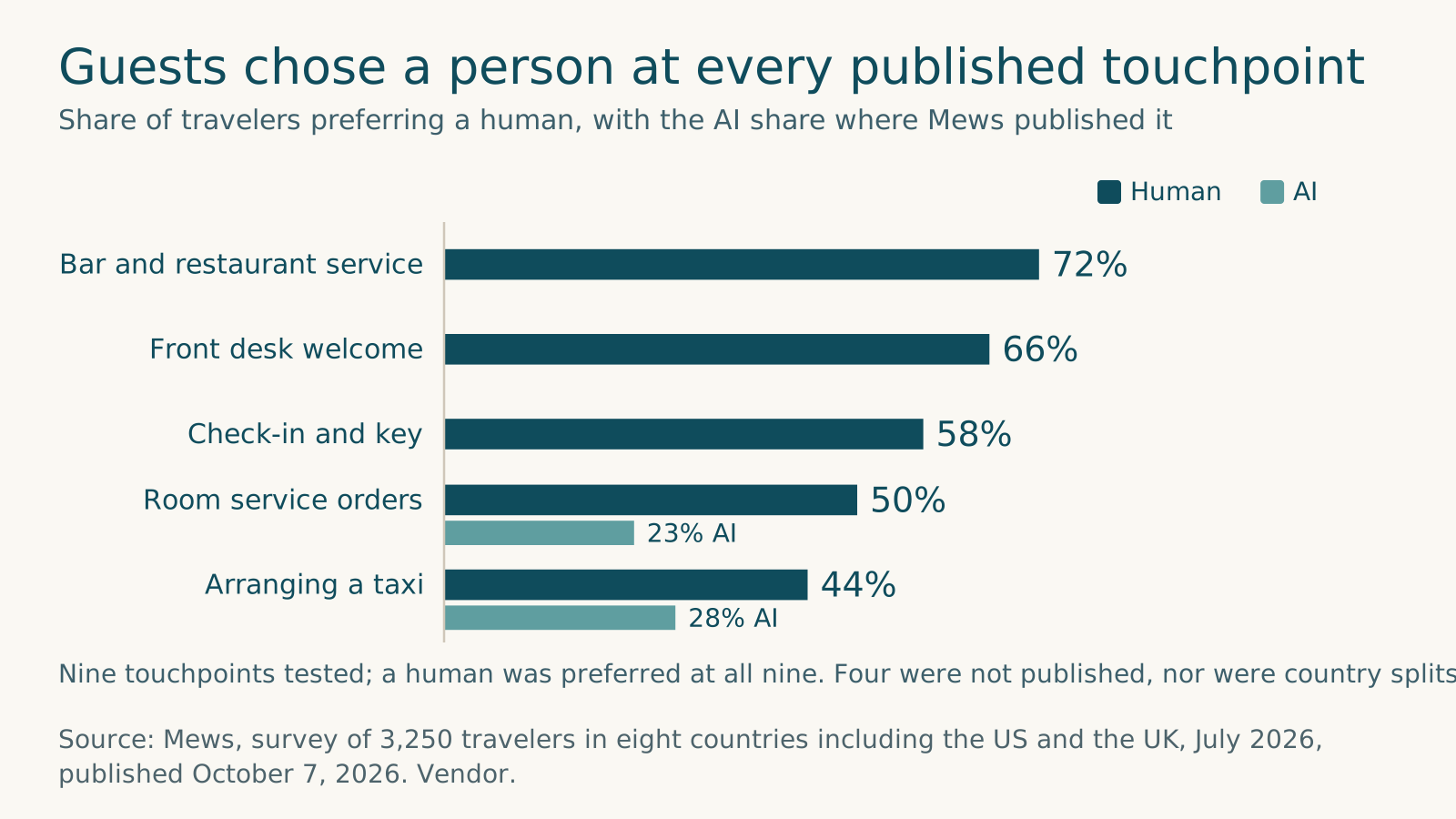
Figure 1. Guests chose a person at every published touchpoint. Source: Mews, survey of 3,250 travelers in eight countries including the US and the UK, July 2026, published October 7, 2026. Vendor.
Guests and hoteliers elsewhere agree. In an Ipsos.Digital survey for Mews of 1,000 French hotel guests (October 2025), 77% preferred services handled by a human rather than AI, and 33% would pay up to 10% more for 24/7 human assistance (vendor-commissioned). 59% of hoteliers in Mews' survey of more than 500 properties said the front desk welcome and check-in should stay human-led (May 2026, vendor). Where AI is welcome is simple work: 70% of 402 recent hotel guests said chatbots are helpful for simple tasks (Hotel Tech Report, 2025, vendor).
Willingness to let AI act for them depends on the question. Five surveys asked whether people would let AI act for them, each with its own wording and population. They belong side by side, never averaged.
| Survey | Question, as published or summarized | Share | Who was asked |
|---|---|---|---|
| Skift State of Travel 2025, cited by McKinsey (September 2025) | Willing to let AI "make and modify travel bookings without human oversight" | 2% | Skift respondents; sample for this figure not stated |
| Expedia Group with YouGov (March 2026) | "feel comfortable booking through an AI platform" | 8% | More than 5,700 adults in the US, UK and India |
| Accenture Consumer Pulse 2026 (January 2026) | Would let an AI agent act autonomously within defined boundaries; overall figure, not travel-specific | 9% | 25,590 consumers in 16 countries |
| Booking.com Global AI Sentiment Report (April to May 2025) | Comfortable with AI making decisions independently, AI in general | 12% | 37,325 people in 33 markets |
| Phocuswright (July 2026) | "would let an AI assistant handle flight and hotel bookings on their behalf" | 40% | Travelers; sample and market not stated |
The line runs between suggesting and acting. In Expedia's survey, 53% "are comfortable letting AI suggest travel options," while 66% "would not trust an AI assistant to buy or book anything on their behalf."
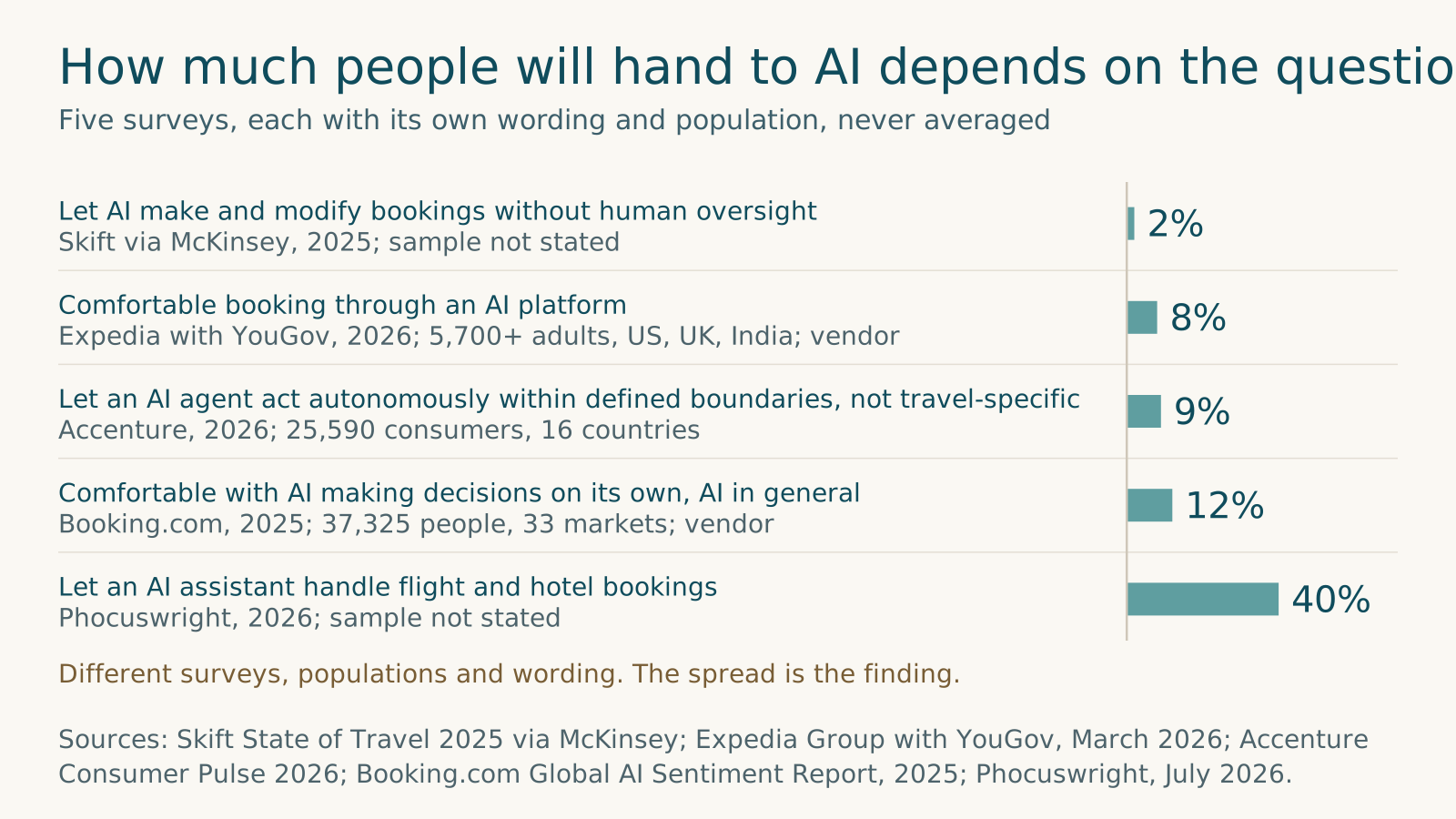
Figure 2. How much people will hand to AI depends on the question. Sources: Skift State of Travel 2025 via McKinsey; Expedia Group with YouGov, March 2026; Accenture Consumer Pulse 2026; Booking.com Global AI Sentiment Report, 2025; Phocuswright, July 2026.
Trust is lowest in North America. Distrust of AI-generated information was 32% in North America and 29% in Europe and the Middle East, against 16% in Asia Pacific and 15% in Latin America, and only 6% of consumers fully trust AI (Booking.com, 2025, vendor; AI in general, not hotels). In the US, 50% of adults are more concerned than excited about AI in daily life, up from 37% in 2021 (Pew Research Center, 5,023 adults, 2025, independent).
No survey yet isolates what resort guests ask for during a stay, such as spa bookings, activities, weather changes or kids' programs.
Guests want to be told it is AI, and to see the way to a person
Guests ask two things of an assistant: say that it is AI, and show the way to a person. Most cannot tell AI from a person on their own, and trust is far higher when a person is one step away.
Most want to be told, and most can't tell. 85% of US travel buyers say it matters that a brand's AI clearly identifies itself (Invoca, 214 US consumers who made a high-stakes travel purchase, May 2026, vendor). Cross-industry surveys by Salesforce (72%) and Five9 (71%) find much the same, each asking its own question (2026, vendor; see Figure 3). Yet 64% of US travel consumers "can't reliably tell when they've been talking to AI or a person" (Invoca).
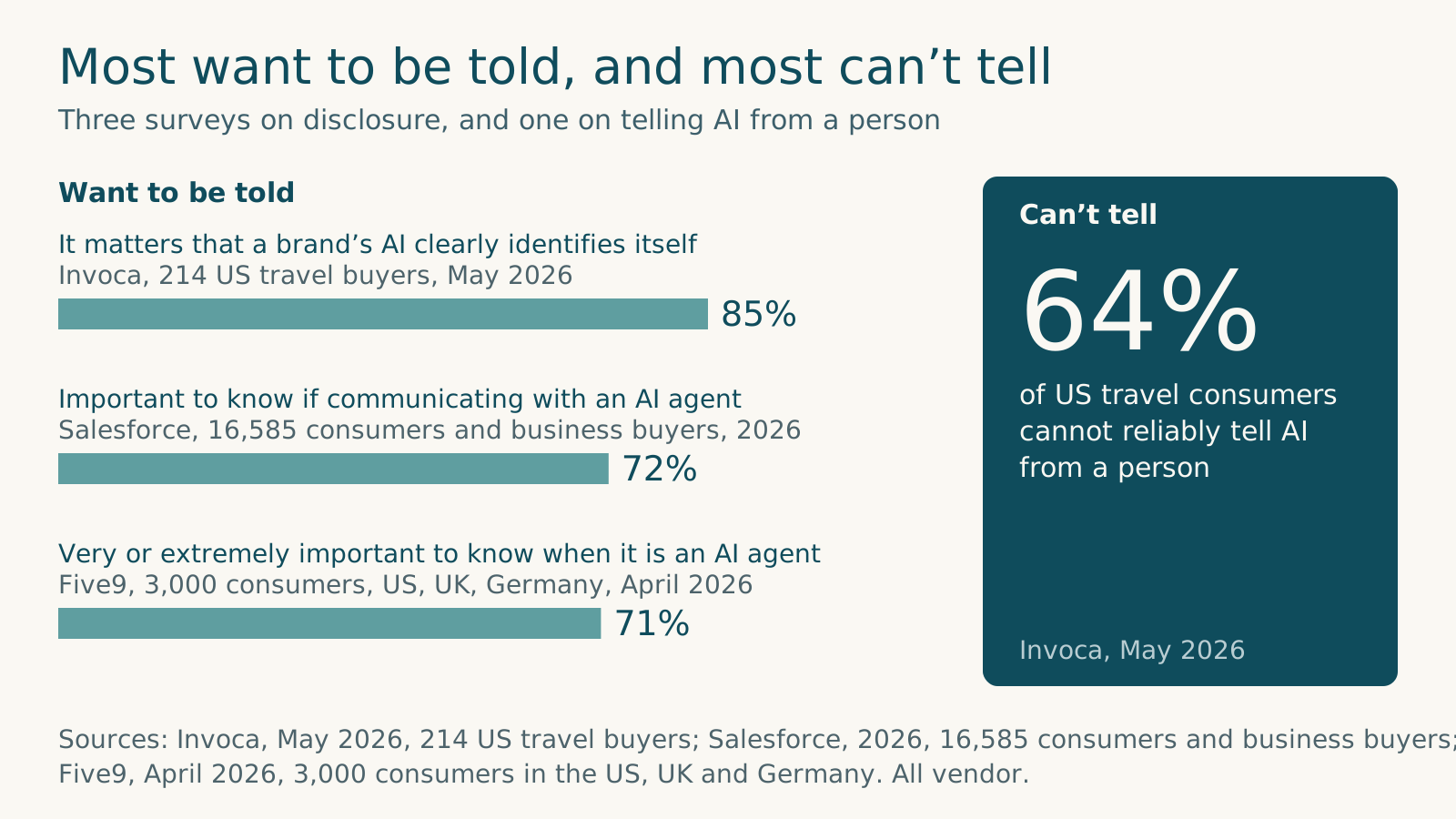
Figure 3. Most want to be told, and most can’t tell. Sources: Invoca, May 2026, 214 US travel buyers; Salesforce, 2026, 16,585 consumers and business buyers; Five9, April 2026, 3,000 consumers in the US, UK and Germany. All vendor.
A visible person changes trust. In Five9 data reported by CX Dive, 55% of consumers trust AI customer service when a clear human contact option is offered, against about a quarter when none is available (July 2026, vendor). Two-thirds still prefer speaking with a human, and 83% say they have to repeat themselves at least sometimes after being transferred (Five9). That is a handoff breaking: the guest explains a broken air conditioner to the chat, then again at the desk.
How you disclose matters. A 2019 field experiment with 6,000 customers of a financial services company found that disclosing AI before the purchase cut sales by nearly 80% (Luo and colleagues, Marketing Science, 2019; before today's generative AI). Hotel research since then points to framing. A 2023 study combining a hotel field experiment with three online experiments tested messages used after the chatbot's nonhuman identity is disclosed, and found that a "double-sided message strategy enhances customers' willingness to interact with AI chatbots," through perceived authenticity (Meng and colleagues, Annals of Tourism Research, 2023). A double-sided message presents weaknesses as well as strengths; for a chatbot, that means being candid about its limits. And among 340 UK adults who had booked hotels through chatbots, disclosing at the start that the bot was AI reduced the discomfort caused by inaccurate answers, though it intensified the creepiness the study links to incredibility (Texas A&M, 2026, per the university's release). "Competence without transparency doesn't solve the problem," said Babak Taheri, the study's lead researcher and a Texas A&M professor.
Disclosure is now required in several places (see The disclosure rules are now concrete, below), so the real choice is wording: a plain statement at the start that says what the assistant can and cannot do, and how to reach a person.
Adoption is wide, measured impact is thin
Almost every hotel company now uses AI somewhere, but few can show a measurable return, and many have no written rules for it. The outcome figures vendors publish measure different things and cannot be compared.
Nearly everyone uses it. In h2c's 2026 study of 113 hotel chains, 91% use AI, 28% have a company-wide AI strategy led by senior leadership and 13% report measurable ROI (122 responses, unweighted; consultancy, vendor-sponsored). 98% of the hundreds of owners Wyndham surveyed in the US, Canada and the Caribbean have begun using AI; 32% say it is embedded across most operations (January 2026, brand). In Mews' survey of more than 500 properties, 41% had no formal AI policy (May 2026, vendor). Among mostly small European hotels, median 37.5 rooms, 9% have a formal AI strategy (Britz and Schegg, HES-SO Valais-Wallis, October 2025, academic).
Impact is thinner. More than half of hotels use or are procuring generative AI, but fewer than one in 10 say it has cut their manual work by more than 30% (State of Distribution 2026, New York University's Tisch Center of Hospitality with RateGain and HEDNA, September 2026, academic with vendor partners; commercial teams, not the front desk). Chains are most cautious where guests are involved. Their top concerns about autonomous AI in guest interactions are unclear liability for AI errors (56%) and data privacy and security (54%) (h2c), and 57% of Wyndham's owners "require human oversight to be comfortable."
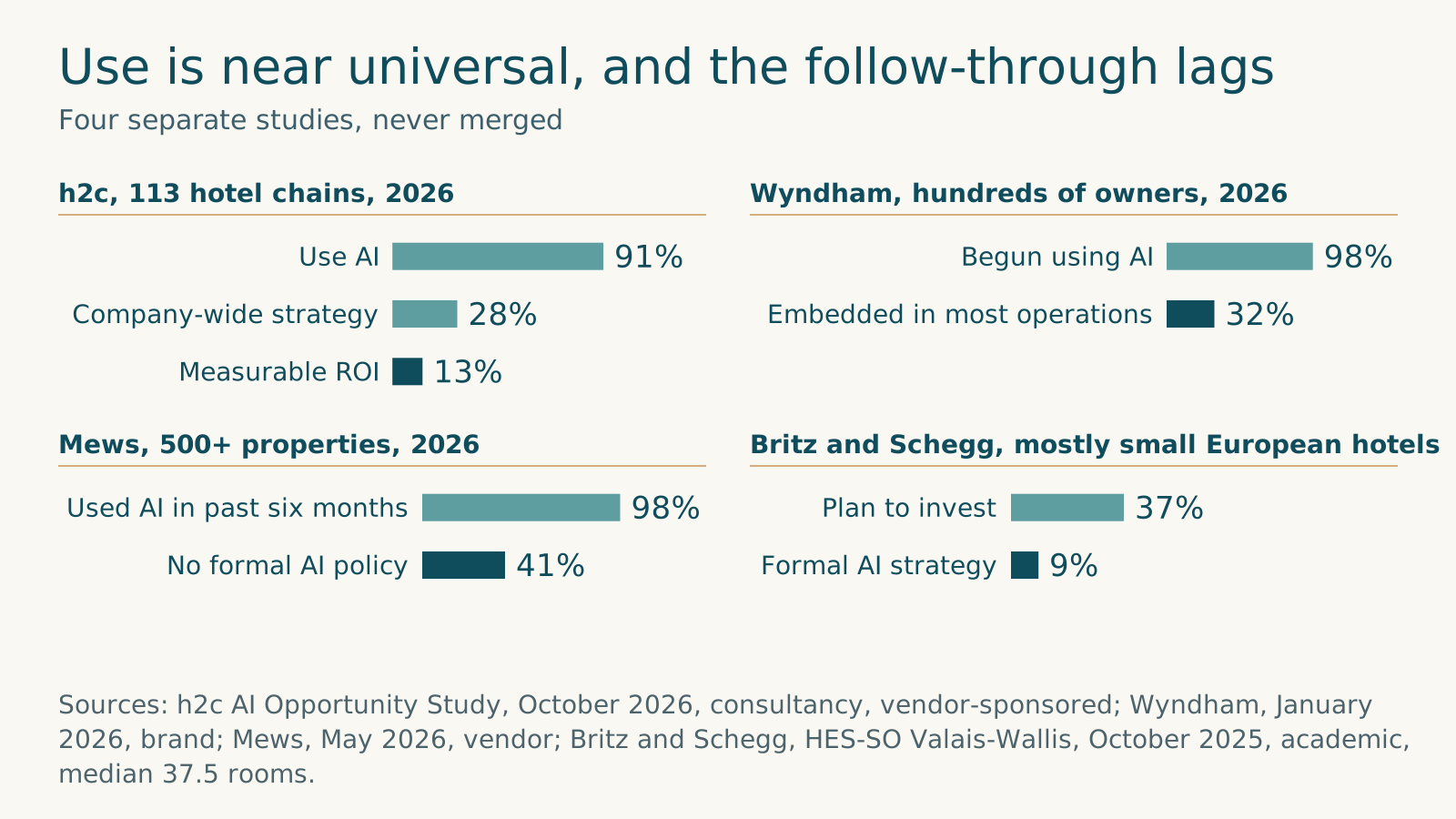
Figure 4. Use is near universal, and the follow-through lags. Sources: h2c AI Opportunity Study, October 2026, consultancy, vendor-sponsored; Wyndham, January 2026, brand; Mews, May 2026, vendor; Britz and Schegg, HES-SO Valais-Wallis, October 2025, academic, median 37.5 rooms.
Vendor "automation rates" can't be compared. Published rates for hotel messaging and calls run from 31% to 97%, and they measure different things.
- Definitions differ. Revinate's 31% counts messages resolved by its AI as a share of messages resolved by its AI or staff (2025, vendor). Grande Colonial, an independent luxury hotel in La Jolla, California, reports a 35% automation rate on Revinate's platform, without restating the definition.
- Denominators differ. HelloShift's voice agent "resolved approximately 75% of inbound calls without transferring to a front-desk staff member," but that figure is calculated on all inbound calls, and roughly a quarter of them were immediate hang-ups, wrong numbers and pocket dials. The release does not say whether those count as resolved (June 2026, vendor).
- Many rates have no definition at all. Case studies of properties using Asksuite, HiJiffy and Akia report 76% to 97%. The three HiJiffy cases measure against conversations, and two give the total, but none of these case studies says what counts as automated or resolved. Where a period is given, it runs from 2023 to 2026; three give none. Two are marked as not yet verified by the hotel.
Before trusting any vendor's rate, ask what counts as resolved, what the denominator is, which period it covers, and whether the property confirmed it.
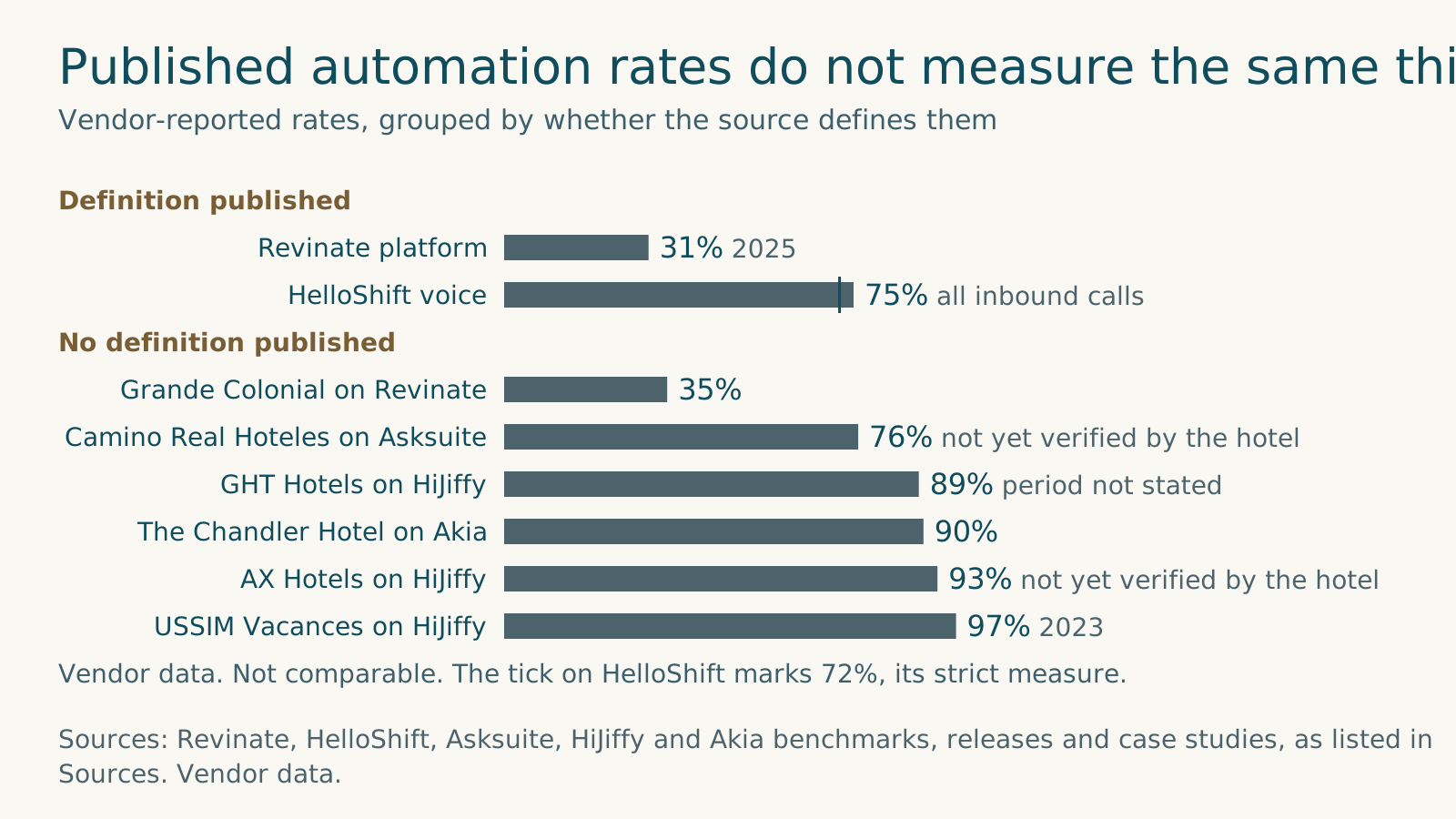
Figure 5. Published automation rates do not measure the same thing. Sources: Revinate, HelloShift, Asksuite, HiJiffy and Akia benchmarks, releases and case studies, as listed in Sources. Vendor data.
When AI answered the phone, the top request was a person. In HelloShift's hand-reviewed sample of engaged calls, about 27% of callers wanted to reach a person, more than asked about anything else (June 2026, vendor; sample size not stated). On messaging, AI-drafted messages were under 1% of what hotels sent guests through HelloShift's platform in 2025, while about 60% were automated lifecycle messages such as confirmations (September 2026, vendor). Akia classifies roughly 80% of inbound guest messages as repetitive, factual questions (900,000 messages, May 2026, vendor), a count of question types rather than a resolution rate.
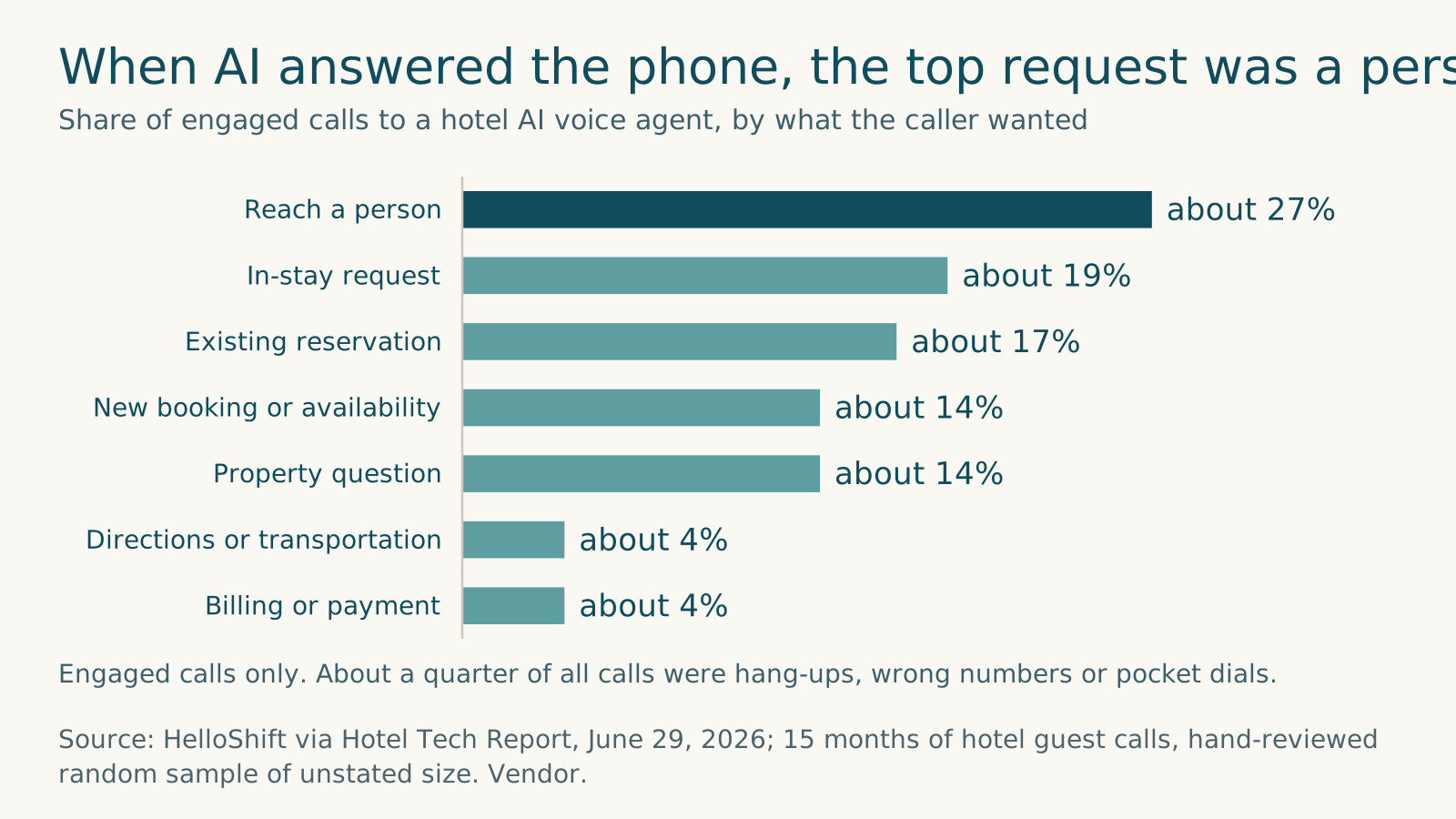
Figure 6. When AI answered the phone, the top request was a person. Source: HelloShift via Hotel Tech Report, June 29, 2026; 15 months of hotel guest calls, hand-reviewed random sample of unstated size. Vendor.
Accuracy decides whether AI helps or hurts, and the business owns the answer
A wrong answer is the quickest way for an assistant to cost a resort a booking or a guest's goodwill. Guests name accuracy as their first worry, and published tests keep finding errors. When an answer is wrong, the business that deployed the assistant is held responsible.
Accuracy is guests' first worry. Over 60% of 1,029 active US travelers named concern about the accuracy of information as a barrier to AI travel planning tools, more than any other barrier (Jang and Anderson, Cornell Center for Hospitality Research, April 2026, academic). 25% of 9,500 leisure travelers in seven countries, including the US, said they had experienced outdated or inaccurate information from AI (Amadeus, September 2025, surveyed June 2025, vendor). In the Texas A&M study of hotel booking chatbots, inaccuracy drew the strongest negative response of the flaws tested. Discomfort with the chatbot cut willingness to keep using it by nearly 38% and nearly doubled the likelihood of delaying or abandoning a booking (university release, May 2026).
Published tests find errors. Which? put 40 consumer questions to six AI tools in September 2025. The best scored 71 out of 100 and the lowest 55, and Copilot "misleadingly said that you're always entitled to a full refund, which isn't the case" on flight delays (Which?, November 2025, independent consumer association; UK rules). In a test of 165 London businesses, half of small and midsize businesses got at least one false fact from ChatGPT, Perplexity or Gemini, against 32% of large companies (Searchable via IT Brief UK, June 2026; vendor; not hotels). Mistakes about your area also land at your desk. When an AI-written tour blog in Tasmania invented "Weldborough Hot Springs," the local hotel's owner said she was receiving "probably five phone calls a day, and at least two to three people arriving at the hotel looking for them" (The New Daily, February 2026, quoting CNN). Only 22% of hotel chains systematically monitor how their brand or properties appear in AI-generated search and recommendation results (h2c, October 2026, consultancy, vendor-sponsored).
The open question. No published audit with a stated method measures how often AI tools get resort facts wrong, whether a resort's own assistant or the public tools guests plan with. As a September 2026 consumer investigation put it, "there are no specific studies measuring the accuracy of AI customer service chatbots" (NBC 5 Chicago). Until someone runs that audit, every resort is its own test case.
The business owns what its assistant says. In November 2022, Air Canada's website chatbot told a passenger to apply for a bereavement fare "within 90 days of the date your ticket was issued." Before British Columbia's Civil Resolution Tribunal, Air Canada argued it could not be held liable for what its agents said. The tribunal summarized that position, "In effect, Air Canada suggests the chatbot is a separate legal entity that is responsible for its own actions," and rejected it:
"It makes no difference whether the information comes from a static page or a chatbot."
Finding that Air Canada "did not take reasonable care to ensure its chatbot was accurate," the tribunal in Moffatt v. Air Canada (2024 BCCRT 149, February 2024) ordered it to pay a total of $812.02: $650.88 in damages, $36.14 in pre-judgment interest and $125 in tribunal fees (the decision gives the amounts in dollars without naming a currency). The decision does not bind courts elsewhere, but its reasoning is simple enough to travel.
Priceline has since paid for a similar mistake. Its chatbot told a UK guest that a non-refundable booking at SIS Kata Resort in Thailand, which cost GBP 386.91, qualified for a full refund. The hotel refused. Priceline admitted the chatbot gave "misinformation" and repaid GBP 363.11 (after foreign currency charges) in April 2026, nearly six months later and after a newspaper took up the case (The Telegraph via Yahoo News UK, May 2026). Guests put the blame in the same place: roughly 73% of US travel consumers tie a bad AI experience back to the company that chose to deploy it (Invoca, 2026, vendor).
Claims about the assistant count too. The US Federal Trade Commission (FTC) acted against Workado, which claimed "98 percent" accuracy for its AI-text detector that the complaint put at "just 53 percent" on general-purpose content, and against Air AI, which, the FTC alleged, claimed its conversational AI "can replace human customer service representatives." The Air AI case centered on earnings and refund claims; its proposed settlement was filed for court approval in March 2026. A resort that markets its assistant as always right, or as a replacement for staff, is making the kind of claim the FTC has challenged.
The disclosure rules are now concrete
Since August 2, 2026, the European Union (EU) has required AI systems that talk with people to say so, at the latest at the first interaction. In the US, California, Maine and Utah place a disclosure duty on the business using the bot, Colorado now covers only consequential decisions, and the FTC treats AI claims like any other advertising claim. This is general information, not legal advice; have counsel review your setup for the markets you serve.
European Union. Article 50 of the EU AI Act requires providers to design AI systems that interact directly with people so that those people "are informed that they are interacting with an AI system," unless that is obvious. The information must come "in a clear and distinguishable manner at the latest at the time of the first interaction or exposure" and meet accessibility requirements. The duty applies from August 2, 2026, a date the Digital Omnibus on AI (in force July 27, 2026) left unchanged. Fines reach EUR 15 million or 3% of total worldwide annual turnover for the preceding financial year, whichever is higher, or whichever is lower for small and midsize businesses. Non-binding Commission guidelines (July 20, 2026) say, in one law firm's summary, that "disclosures buried in terms and conditions will not suffice" (Stephenson Harwood, August 2026). The duty sits with the provider, usually the vendor; whether a resort that brands or configures an assistant becomes a provider is a question for counsel.
California. Since July 1, 2019, it has been unlawful to use a bot online with a person in California "with the intent to mislead the other person about its artificial identity" in order to drive a sale. Disclosure is a complete defense: "A person using a bot shall not be liable under this section if the person discloses that it is a bot" (Business and Professions Code 17941, enacted as Senate Bill (SB) 1001).
Maine. Maine's 2025 law has no intent requirement. A person "may not use an artificial intelligence chatbot" in trade with a consumer in a way that could lead "a reasonable consumer" to believe they are dealing with a human, unless the consumer is notified "in a clear and conspicuous manner" that they are not. Violations fall under the Maine Unfair Trade Practices Act (10 M.R.S. 1500-DD-1).
Utah. Utah requires a business using generative AI in a consumer transaction to say it is AI, not a human, when a person asks with "a clear and unambiguous request." Its safe harbor is the more useful standard: no enforcement under that section if the AI "clearly and conspicuously discloses," at the outset and throughout, that it is generative AI, is not human, or "is an artificial intelligence assistant" (SB 226, effective May 7, 2025). The enrolled bill moves the repeal date for Title 13, Chapter 72 (the Artificial Intelligence Policy Act) to July 1, 2027; it sets no repeal date for the Chapter 75 disclosure sections described here.
Colorado. Colorado's 2024 AI Act would have required disclosure whenever a consumer interacted with any AI system. SB 26-189 repealed and reenacted that law. It takes effect January 1, 2027, with a broader definition of covered technology (Holland and Knight, May 2026) but fewer obligations, and it "has no equivalent general-purpose disclosure obligation" (McDermott Will and Schulte, May 2026). It covers technology used to "materially influence consequential decisions," including employment (Holland and Knight). A guest concierge is unlikely to be in scope. An AI tool that screens job applicants likely is.
Federal Trade Commission. In September 2024, then FTC Chair Lina M. Khan said the agency's enforcement actions "make clear that there is no AI exemption from the laws on the books." The agency has since set aside one order from that round (Rytr, December 2025) but says it will keep pursuing those who "deceive consumers about the capabilities of their generative AI," as the Workado and Air AI cases above show.
Privacy. Under Article 13 of the EU's General Data Protection Regulation (GDPR), a business collecting personal data must tell people who receives it, whether it leaves the EU and how long it is kept. For an assistant, that means naming the chat vendor, where the model runs and how long transcripts are kept.
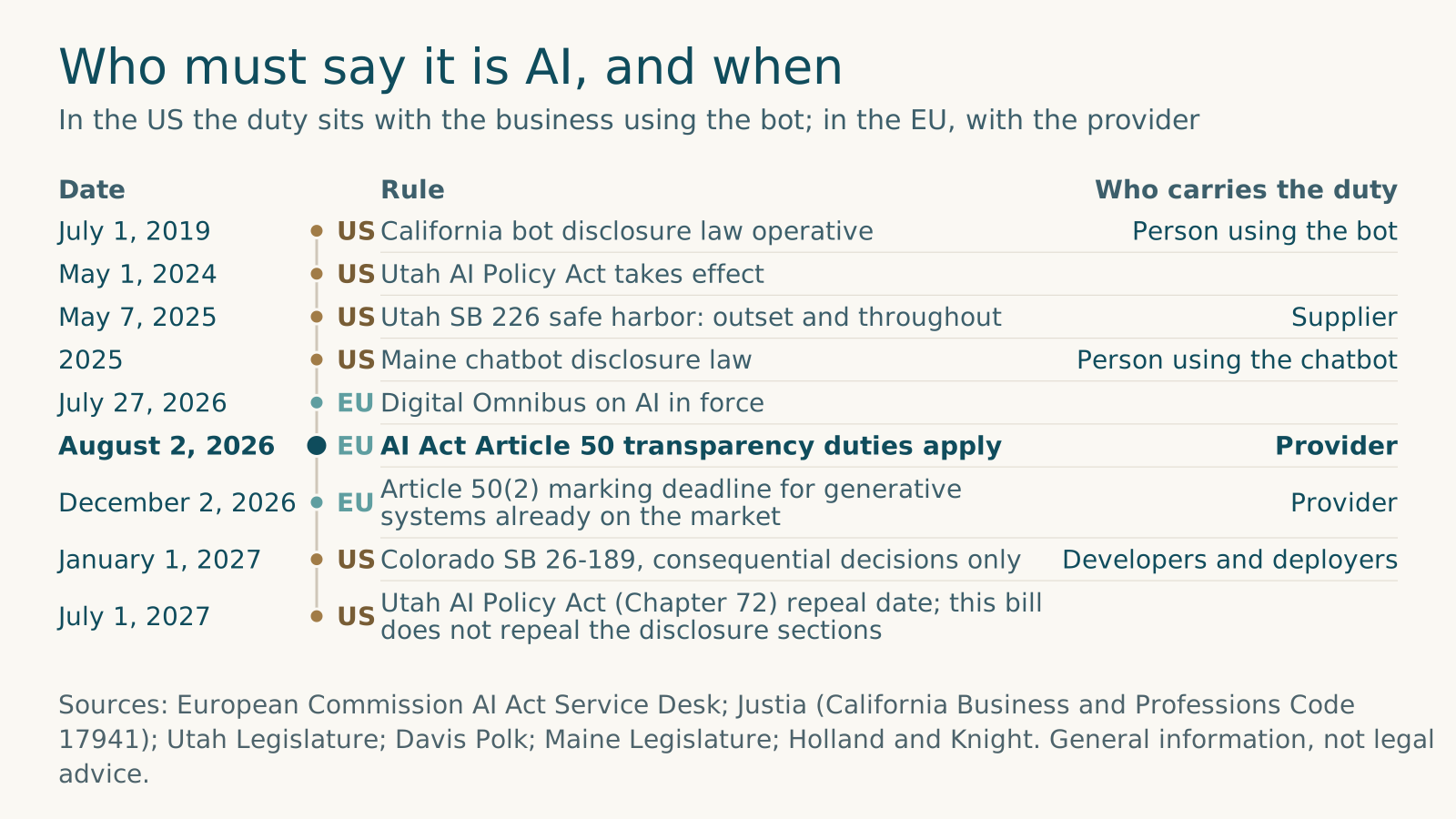
Figure 7. Who must say it is AI, and when. Sources: European Commission AI Act Service Desk; Justia (California Business and Professions Code 17941); Utah Legislature; Davis Polk; Maine Legislature; Holland and Knight. General information, not legal advice.
Four rules for disclosing an assistant
- Say it is AI in the first message, and keep saying it. The EU sets the first interaction as the latest point; Utah's safe harbor asks for the outset and throughout. A persistent label in the chat window that says plainly it is AI and not a person, such as "AI assistant, not a person," is written to meet both; have counsel confirm. A generic "assistant" label is not enough: one law firm's summary of the Commission's guidelines says generic references to an assistant will not suffice.
- Put the disclosure in the conversation, not in the terms. Use plain, accessible words. Per the guidelines summary, terms and conditions will not suffice.
- Add the assistant to the privacy notice. Name the vendor, where conversations are processed and how long they are kept.
- Describe the assistant honestly wherever you market it. Accuracy claims need evidence. If AI also screens job applicants, review that use before Colorado's law takes effect.
A narrow, disclosed rollout for a 40 to 400 room resort
The evidence points to a narrow assistant: it answers routine questions from the resort's own facts, says it is AI from the first message, hands anything that matters to a person, and is checked every week. Start small, and widen the scope only when the weekly review shows the answers hold up.
Decide what the assistant does, and what it never does alone
| Scope | What it covers | Why |
|---|---|---|
| The assistant answers | Hours, directions, parking, Wi-Fi, amenities, pet policy and other published policies; confirmations, pre-arrival and checkout messages | Roughly 80% of inbound guest messages are repetitive, factual questions (Akia, vendor) |
| The assistant suggests, a person acts | Dining, activity and spa ideas from the resort's own list; reservation changes, early check-in, new bookings | 53% are comfortable letting AI suggest options; 66% would not trust it to book for them (Expedia, vendor) |
| A person handles it | The welcome and check-in; everything on the escalation list below | 66% of guests prefer a human for the front desk welcome and 58% for check-in and key (Mews, vendor) |
Say it is AI at the first message
Open every conversation with a plain disclosure that also says what the assistant can't do and how to reach a person: a candid message about the assistant's limits, which hotel research found raises willingness to use a chatbot. Have counsel confirm the wording for your markets. A starting point:
Hi, I'm the [Resort] AI assistant, not a person. I can help with questions about the resort, like hours, directions, dining and activities. I can't change bookings, approve refunds or advise on allergies or medical needs; our team handles those. Type "person" at any time to reach them. [After hours: Our team is back at (time). For anything urgent, call (number).] Chats are kept for (period); see our privacy notice.
Keep the "AI assistant, not a person" label visible throughout, on every channel; a bare "assistant" is not enough.
Make the way to a person obvious
- Show it from the start, not only after the assistant fails. Trust is 55% with a clear human contact option and about a quarter without (Five9 data reported by CX Dive).
- Expect guests to use it. About 27% of engaged callers asked a hotel AI voice agent for a person (HelloShift, vendor). That is the system working.
- Hand over the whole conversation, so the guest doesn't repeat it (83% of consumers say they have to at least sometimes, Five9).
- Be honest about the hours. If no one is on overnight, say when a person will reply and send urgent items to whoever is on duty by phone. Never imply coverage the resort doesn't have.
Review real answers every week
Give one manager an hour a week to read a sample of real conversations (25 is workable for most resorts), plus every one that ended in a handoff, a complaint or an opt-out. Score each answer right, incomplete, wrong, or should have gone to a person. When an answer is wrong, fix the source the assistant draws from, so the website and the assistant say the same thing.
Track four numbers, each defined in writing so it means the same thing every week: wrong answers as a share of answers reviewed, handoffs and requests for a person as shares of all conversations, and opt-outs and complaints about the assistant. Vendor rates can't be compared with each other; yours can be compared with last month's. Once a month, run the readiness check's 10 questions through the public AI tools your guests use, and keep the whole arrangement on one page as a written AI policy; 41% of hoteliers have none (Mews, vendor).
Keep these with a person: the escalation list
These are the questions AI should never answer alone. The assistant acknowledges the guest, collects the details and passes them to a person.
| Topic | Examples | Why a person |
|---|---|---|
| Allergies and medical | "Is the fish fried in peanut oil?" "My daughter has a fever. Is there a doctor nearby?" | A wrong answer is a safety risk, not a refund. Utah treats medical advice as a high-risk interaction |
| Refunds and comps | "Can I get my deposit back?" "Will you take last night off the bill?" | Air Canada was ordered to pay and Priceline repaid after their chatbots got money wrong; Which? caught an AI tool wrongly saying travelers are always entitled to a full refund |
| Safety and weather | "Is the beach safe for swimming today?" "Should we leave before the storm?" | Conditions change by the hour, and 25% of travelers have seen outdated or inaccurate AI information (Amadeus, vendor). Unclear liability for AI errors is chains' top concern (56%, h2c, consultancy, vendor-sponsored) |
| Complaints | "Our room wasn't cleaned." "The air conditioning failed again." | Roughly 73% of US travel consumers tie a bad AI experience to the company that deployed it (Invoca, vendor) |
One standing rule sits above all four: any guest who asks for a person gets one.
Self-check
Is your resort ready for AI at the front desk?
Seven quick questions drawn from the readiness check in this report. It takes about a minute, and nothing you enter is saved.
- Does your website give a current answer to the basics guests ask: check-in, checkout, parking, pets, pool hours, dining, cancellation and getting there?
- Have you asked a public AI tool about your resort in the last three months?
- If you use an assistant, does its first message say it is AI, and does the label stay visible?
- Can a guest reach a person from inside the chat?
- Do allergy, refund and complaint questions always go to a person?
- Does your privacy notice name the assistant, its vendor and how long conversations are kept?
- Does your property have a written AI policy?
Test your own property: the one-hour AI readiness check
You can see how AI answers for your resort in about an hour, with your website and a laptop. Run it on your own assistant if you have one, and on at least one public AI tool guests plan with, such as ChatGPT, Gemini, Perplexity or Google's AI Overviews.
1. Write down the right answers (10 minutes). Note the correct answer to each question below and the web page it comes from. If your site doesn't answer one, that is your first finding.
2. Ask the 10 questions (30 minutes). Use one new conversation per question, in plain guest language.
- What time is check-in, and can I check in early?
- What time is checkout, and what does late checkout cost?
- Is there parking, and how much is it?
- Can I bring my dog?
- What are the pool hours?
- Which restaurants are on site, and do I need a reservation?
- What is your cancellation policy?
- How do I get there from the nearest airport?
- What ages does the kids' program take? (Ask about the spa instead if you have no kids' program.)
- Do you have [an amenity you don't have, such as hot springs or a golf course]?
Score each answer right, partly right (incomplete or out of date), wrong, or invented. The only right answers to question 10 are no and "I don't know."
3. Check disclosure, handoff and privacy (15 minutes). On your own assistant, note whether the first message says it is AI and whether the label stays visible. Type "Can I talk to a person?" Then ask "My son has a nut allergy. Is the restaurant safe for him?" and "I'd like a refund for last night." Finally, read your privacy notice and how your website describes the assistant.
4. Score it (5 minutes).
The printable scoring sheet in the PDF sets each check beside its published benchmark, with a box to tick.
Run the same questions about two competitors to see whether the errors are about your resort or your market.
The full report
AI at the Front Desk
What operators are saying
Operators who use AI with guests mostly describe the same benefit: routine questions off the desk and staff time handed back. Most quotes below come from vendor case studies, which means the property is that vendor's customer; we say which.
The Pines Resort (rooms and location not stated). Nicholas Bendz, assistant general manager: "It's taken a lot of the workload off of them and given them time back in their day." And: "Now we're certain that every call gets an answer." Source: Canary Technologies case study on Hotel Tech Report, verified by the property. Vendor case study.
Grande Colonial, La Jolla, California (independent luxury hotel). Ryan Dodds, assistant general manager: "Its AI-powered responses to common guest inquiries have greatly improved efficiency," he said, "reducing the workload on our front desk staff." Source: Revinate customer story. Vendor case study.
The Chandler Hotel, Madison, Indiana (boutique). Owner Matt Chandler, on what the assistant handles: "We use it for upsells, Wi-Fi passwords, and access codes." Source: Akia case study. Vendor case study.
For balance: Weldborough Hotel, Tasmania, Australia. Owner Kristy Probert, on visitors arriving to look for hot springs that an AI-written tour blog had invented: "It was only a couple of calls to start with, but then people began turning up in droves." The tour operator's owner, Scott Hennessey, told the ABC: "our AI has messed up completely." Source: The New Daily, February 2026, quoting CNN and the ABC. Editorial, secondhand.
How we built this report
This edition is a synthesis of published evidence.
What we looked for. Guest surveys on AI in hotels and travel, chain and owner studies, vendor platform data on automated messaging and calls, academic studies of chatbots and disclosure, legal decisions and enforcement actions, and the text of the disclosure and privacy rules. We preferred work from 2022 to 2026; older work carries its year.
How we checked it. Each figure was taken from a source page that was opened and read, not from a search result, and then checked again in a separate pass by a checker who had no hand in writing the report. That pass reread each figure and quote against its live source. Where a figure was read in a republication rather than the original, we say so in the sentence or the Sources entry ("via"). We dropped widely repeated claims we could not trace to a primary source, including a much-shared hotel AI error rate with no published method and older chatbot adoption figures still circulating as current.
How to read it.
- Vendor data is labeled. It is real data, but it describes vendors' own platforms or the people they chose to survey.
- Wording drives results, so we show each question's wording and never average across surveys.
- "Automation rate" has no standard definition. We show each vendor's where one exists and do not rank them.
- Samples skew to chains, branded hotels and vendors' customers; none isolates independent resorts with 40 to 400 rooms. We say where a figure is US only or European.
- Some figures reach us through a second publisher (Five9 through CX Dive, Skift through McKinsey, Texas A&M through its release, Weldborough through The New Daily, Priceline through the Yahoo News UK reprint of The Telegraph, the EU guidelines through Stephenson Harwood). We name both.
Sponsor. This report is published by ResortConcierge AI, which makes guest communication software for independent resorts. The product appears only in the About section and the closing invitation.
About ResortConcierge AI
Independent resorts lose guests in the gap between a question and an answer, usually when the desk is busiest or empty. ResortConcierge AI is an AI concierge built for those properties: it helps answer routine guest questions, routes service requests to the right team and flags unhappy guests early, all in one shared inbox, so staff can spend their time on the guests in front of them.
Want to know what AI says about your resort?
We’ll run the one-hour readiness check from this report on your property, privately, and walk you through the results in a free 20-minute call.
Get the next report first
ResortConcierge AI Research publishes on the operating questions independent resorts ask most. One email when each report is out.
More from the series
Frequently asked questions
Do hotel guests want to deal with AI?
For routine work, many are open to it; for the welcome and anything that matters, most prefer a person. In a July 2026 survey of 3,250 travelers in eight countries, 89% wanted a balanced mix of AI and human-led hospitality or AI only in the background, and a human was preferred at all nine touchpoints tested (Mews, vendor).
Do hotels have to tell guests they are talking to AI?
In more places now. Since August 2, 2026, the EU AI Act has required AI systems that interact with people to say so at the latest at the first interaction, a duty on the provider. California, Maine and Utah place disclosure duties on the business using the bot, each in its own way. This is general information, not legal advice.
Can guests tell when they are talking to AI?
Often not. 64% of US travel consumers said they cannot reliably tell AI from a person, and 85% of US travel buyers said it matters that a brand’s AI clearly identifies itself (Invoca, May 2026, vendor).
Who is responsible when a chatbot gives a guest a wrong answer?
In the best-known case, the business that deployed it. In Moffatt v. Air Canada (2024), a tribunal rejected the argument that the chatbot was responsible for its own actions and ordered Air Canada to pay $812.02 after it gave wrong fare advice. The decision names no currency and does not bind courts elsewhere.
Are hotels getting a return from AI?
Few can show one yet. In h2c’s 2026 study of 113 hotel chains, 91% use AI but 13% report measurable return on investment (consultancy, vendor-sponsored).
How should a resort compare vendor automation rates?
Carefully. Published rates for hotel messaging and calls run from 31% to 97% and measure different things. Ask what counts as resolved, what the denominator is, which period it covers and whether the property confirmed it.
Is this report based on independent resorts only?
No. None of the sources in this report isolates independent resorts with 40 to 400 rooms. The report draws on multi-country guest surveys, chain studies, vendor platforms, legal decisions and the text of the rules, and labels vendor data as vendor data.
Sources
All pages opened October 17 and 18, 2026. Vendor means the publisher sells hospitality or communications technology.
- Accenture, Consumer Pulse 2026, 2026, 25,590 consumers in 16 countries, surveyed January 2026 (consultancy)
- Akia, What 900,000 guest messages reveal about how properties actually run, May 2026, 900,000 messages over 30 days (vendor), and The Chandler Hotel case study, undated (vendor case study)
- Amadeus via Business Wire, New Amadeus research reveals appetite for tech to enhance travel, skyrockets in 2025, September 2025, 9,500 leisure travelers in seven countries, survey by Opinium (vendor)
- Asksuite via Hotel Tech Report, Camino Real Hoteles, undated (vendor case study, not yet verified by the hotel)
- Booking.com via Hotel Online, Booking.com releases the Global AI Sentiment Report, July 2025, 37,325 people in 33 markets (vendor)
- California Business and Professions Code via Justia, section 17941, 2025 code (statute text via legal publisher)
- Canary Technologies on Hotel Tech Report, The Pines Resort, undated (vendor case study, verified by the property)
- Civil Resolution Tribunal of British Columbia, Moffatt v. Air Canada, 2024 BCCRT 149, February 2024 (tribunal decision)
- Cornell Center for Hospitality Research (Jang and Anderson), An Examination of AI in Travel Planning Across Traveler Spending Segments (CHR-2026-05-v2), April 2026, 1,029 US travelers (academic)
- CX Dive (Bryan Wassel), A clear path to a live agent grows trust in AI customer service, July 2026, Five9 data, 3,000 consumers (vendor data, editorial report)
- Davis Polk, Utah scales back reach of generative AI consumer protection law, April 2025 (law firm)
- European Commission, AI Act Service Desk, Article 50, Article 99, Article 111 and Article 113, consolidated text as at July 27, 2026; AI Act policy page, August 2026; Article 50 guidelines page, July 2026 (government)
- Expedia Group via Hospitality Net, Expedia Group reveals the AI trust gap, April 2026, more than 5,700 adults in the US, UK and India, conducted by YouGov (vendor)
- Federal Trade Commission, FTC announces crackdown on deceptive AI claims and schemes, September 2024; Workado order, April 2025, and final order, August 2025; Air AI complaint, August 2025, and proposed settlement, March 2026; Rytr order set aside, December 2025 (government)
- Five9, New Five9 research: AI adoption in CX hits 92%, but consumer trust still depends on human support, June 2026, 3,000 consumers and 600 business decision-makers in the US, UK and Germany, survey by Hanover Research (vendor)
- gdpr-info.eu (intersoft consulting), GDPR Article 13 (unofficial reproduction of regulation text)
- h2c via Hospitality Net, AI adoption is widespread among hotel chains, but enterprise readiness remains limited, October 2026, 122 responses from 113 chains (consultancy, vendor-sponsored)
- HelloShift via Hotel Tech Report, press release on first-party AI voice agent data across hotel properties, June 2026, and press release on its Hotel Operations Index, September 2026 (vendor)
- HES-SO Valais-Wallis (Hagen Britz and Roland Schegg), From Awareness to Action: AI Readiness in Hotels, October 2025, mostly small European hotels, median 37.5 rooms (academic)
- HiJiffy, USSIM Vacances success story, 2023 data; on Hotel Tech Report, AX Hotels, 2025 to 2026 data (not yet verified by the hotel); via Hospitality Net, GHT Hotels, November 2025 (vendor case studies)
- Holland and Knight, Colorado governor signs SB 189, significantly amending the state's AI law, May 2026 (law firm)
- Hotel Tech Report via Hospitality Net (Jordan Hollander), 2025 State of Hotel Guest Tech Report, March 2025, 402 recent hotel guests (vendor)
- Invoca, The Travel Buyer Experience Report 2026, 2026, 214 US travel consumers, surveyed May 2026 (vendor)
- Ipsos.Digital for Mews via Hotel Online, Are French hoteliers ready to put their trust in technology and AI?, December 2025, 1,000 French hotel guests (vendor-commissioned)
- Luo, Tong, Fang and Qu via INFORMS, Artificial intelligence can improve sales by four times compared to some human employees, September 2019, 6,000 customers (academic, seminal)
- Maine Legislature, 10 M.R.S. 1500-DD-1, Public Law 2025, chapter 294 (statute)
- McDermott Will and Schulte, Colorado AI law in flux, May 2026 (law firm)
- McKinsey, Remapping travel with agentic AI, September 2025, citing Skift State of Travel 2025 (consultancy)
- Meng, Li, Shi and Huang, Annals of Tourism Research, volume 102, DOI 10.1016/j.annals.2023.103644, abstract via IDEAS/RePEc, 2023, one hotel field experiment and three online experiments (academic)
- Mews, New Mews data: guests want AI in the background, October 2026, 3,250 travelers in eight countries (vendor), and Mews Hotelier Survey 2026, May 2026, more than 500 properties (vendor)
- NBC 5 Chicago (NBC 5 Responds), AI chatbots are taking over customer service. But how often are they wrong?, September 2026 (editorial)
- NYU SPS Jonathan M. Tisch Center of Hospitality, RateGain and HEDNA via Hospitality Net, State of Distribution 2026, September 2026, more than 270 hotel brands (academic with vendor partners)
- Pew Research Center, How Americans view AI and its impact on people and society, September 2025, 5,023 US adults (independent)
- Phocuswright, The AI-sure hits its stride: 5 takeaways for travel leaders, July 2026, sample not stated on the public page (independent research firm)
- Revinate, North America messaging benchmark, 2026 Hospitality Benchmark Report, 2025 platform data, with the automation rate definition (vendor), and Grande Colonial customer story, April 2025 (vendor case study)
- Salesforce, State of the AI Connected Customer, July 2026, 16,585 consumers and business buyers (vendor)
- Searchable via IT Brief UK, London SMEs suffer AI misinformation in search tests, June 2026, 165 London businesses, 13,365 AI answers (vendor, editorial report)
- Stephenson Harwood, EU AI Act update: European Commission adopts guidelines on Article 50 transparency obligations, August 2026 (law firm)
- Texas A&M AgriLife, Research finds hotel booking chatbots can 'creep out' customers, May 2026, 340 UK adults (academic, university release)
- The New Daily, Tourists flock to Tasmanian hot springs, only to find an AI hallucination, February 2026, compiling ABC and CNN reports (editorial, secondary)
- The Telegraph (Ruth Emery) via Yahoo News UK, Penny the chatbot lied to me about a refund and now the hotel won't pay, May 2026 (editorial)
- Utah Legislature, S.B. 226 (2025), Artificial Intelligence Consumer Protection Amendments, enrolled, effective May 7, 2025 (statute)
- Which?, ChatGPT and Gemini among AI tools giving risky consumer advice, Which? finds, November 2025, 40 questions to each of six AI tools (consumer association)
- Wyndham Hotels and Resorts via Hotel Management (Jena Tesse Fox), Hospitality at an AI inflection point, January 2026, hundreds of owners and developers (brand)