ResortConcierge AI Research · No. 04
Reviews Are Revenue
What a review point is worth to an independent resort, and how to earn it

On this page
- 01About this report
- 02Key findings: seven numbers on what reviews are worth
- 03A review point is worth real money, but not the number everyone quotes
- 04Reviews shrank the brand premium, and independents gain the most
- 05Better replies beat more replies
- 06Recovery lifts satisfaction, but its effect on reviews is unmeasured
- 07Volume decides who gets seen, and the rules decide how to ask
- 08Closing the review loop
- 09Test your own property: the one-hour review audit
- 10What the research says, in the researchers' own words
- 11How we built this report
- 12About ResortConcierge AI
- 13Sources
About this report
What is one review point worth to an independent resort, and what actually earns more of them? That is the question behind Reviews Are Revenue, the fourth report in the ResortConcierge AI Research series.
It is written for GMs (general managers) and owners of independent resorts with 40 to 400 rooms, and for the revenue, front office and guest experience leads who price the rooms and answer the reviews.
This edition is built from published evidence: peer-reviewed studies, working papers, platform policies, government rules and vendor benchmarks. Each figure was taken from a source page that was opened and read, and then checked again in a separate pass by a checker who had no hand in writing the report. Where a figure was read in a republication or summary rather than the original, we say "via" and name that page. Vendor data is labeled as vendor data. Studies older than four years carry their year. Where the evidence is thin, or where good studies disagree, we say so.
Inside you will find seven numbers worth knowing, six chapters, a one-hour review audit you can run from your own review profiles, and the full method and source list. The designed report, with the printable audit sheet, is free to download.
Key findings: seven numbers on what reviews are worth
The evidence agrees on direction. Better reviews go with more demand and more revenue, and independents gain more from them than chains do. It is less kind to two industry habits: quoting one 2012 number as if it were a law, and answering every review as fast as possible.
11.2%
How much a hotel priced at the $100 average of its same-star competitors could raise its price if its review score rose from 3.3 to 4.3 and keep the same chance of being booked, in a worked example from 13,341 Travelocity reservations in July 2012. It measures the chance of being booked, not occupancy.
Anderson, Cornell Center for Hospitality Research, 2012 (academic, seminal)
27.8%
Higher demand for a hotel rated one star higher across review platforms, by 2014. The effect on price was "negligible."
Lewis and Zervas, working paper, October 2019 (4,477 hotels in five western US states, 2005 to 2014)
10.4% vs 4.3%
The estimated effect on demand (occupancy adjusted for price) of a one-star rating increase for independent hotels, against chains.
Lewis and Zervas, 2019 (same panel)
25% to 6.9%
The fall in chains' revenue premium over independents in small Texas markets, 2000 to 2015, which the author ties at least partly to online reviews.
Hollenbeck, Journal of Marketing Research, 2018 (5,265 Texas hotels)
About 40%
The response rate after which replying to reviews showed diminishing returns. Hotels in one global benchmark answered 68.8% in 2025.
Cornell Center for Hospitality Research, 2016 (academic); Shiji, 2026 (vendor, 12,000 hotels)
83.8% vs 52.1%
Share of hotels ChatGPT named in "near me" searches when they had 2,500 or more Google reviews, against fewer than 50. Above a 4.0 rating, the share named stopped rising.
Local Falcon, September 2026 (998 US hotels; vendor research, correlation only)
$53,088
The most a court can impose per violation of the Federal Trade Commission (FTC) rule on consumer reviews. Google and Tripadvisor go further and ban incentives for any review.
FTC; Electronic Code of Federal Regulations, current as of October 15, 2026 (government)
None of these numbers comes from independent resorts alone. The revenue studies use online travel agency (OTA) and Tripadvisor ratings from 2000 to 2016, mostly in US cities and Texas towns, and none names Google among its rating sources. Read them as direction and rough size, not a forecast for one property.
The full report
Reviews Are Revenue
A review point is worth real money, but not the number everyone quotes
Every study in this chapter links better reviews to better hotel performance. They do not agree on a single size. The famous 11.2% is one worked example from a 2012 study of one booking site, and the newest large panel finds that ratings move demand far more than they move price.
The 11.2% is one worked example from 2012. In a November 2012 Cornell Hospitality Report, Chris K. Anderson of Cornell's Center for Hospitality Research modeled the chance that a Travelocity shopper would book a listed hotel. He used 13,341 reservations made in nine major US cities during July 2012, with controls for price against same-star competitors, page position and star level. With the hotel at $100 and the same-star competitors on its list page averaging $100, he worked one example: "If we were to increase our review score from 3.3 to 4.3 we could increase our price about 11.2 percent and maintain the same probability of being selected."
That holds the chance of being chosen on one OTA constant, for one month of bookings. It did not measure occupancy, though the report's own summary describes the result as "the same occupancy or market share." It did not split hotels by segment or use Google's rating scale. Quote it with its year and its conditions, or not at all.
Across all hotels, RevPAR moved almost in step with reputation. The same report matched ReviewPro's Global Review Index, a score built from major review sites and OTAs, to monthly data from STR, the hotel benchmarking firm, for 11 cities in Europe and North America from January 2010 to June 2012. Across all hotels, a 1% higher index went with 0.80% higher average daily rate (ADR), 0.20% higher occupancy and 0.96% higher revenue per available room (RevPAR). The often-quoted "up to 1.42%" RevPAR figure is the Midscale row, the top of the range. Luxury was the lowest, at 0.49% RevPAR. Anderson cautioned that "many factors contribute to hotel performance that are not measured here." This is a correlation, and for an upscale resort the segment rows are the more honest guide.
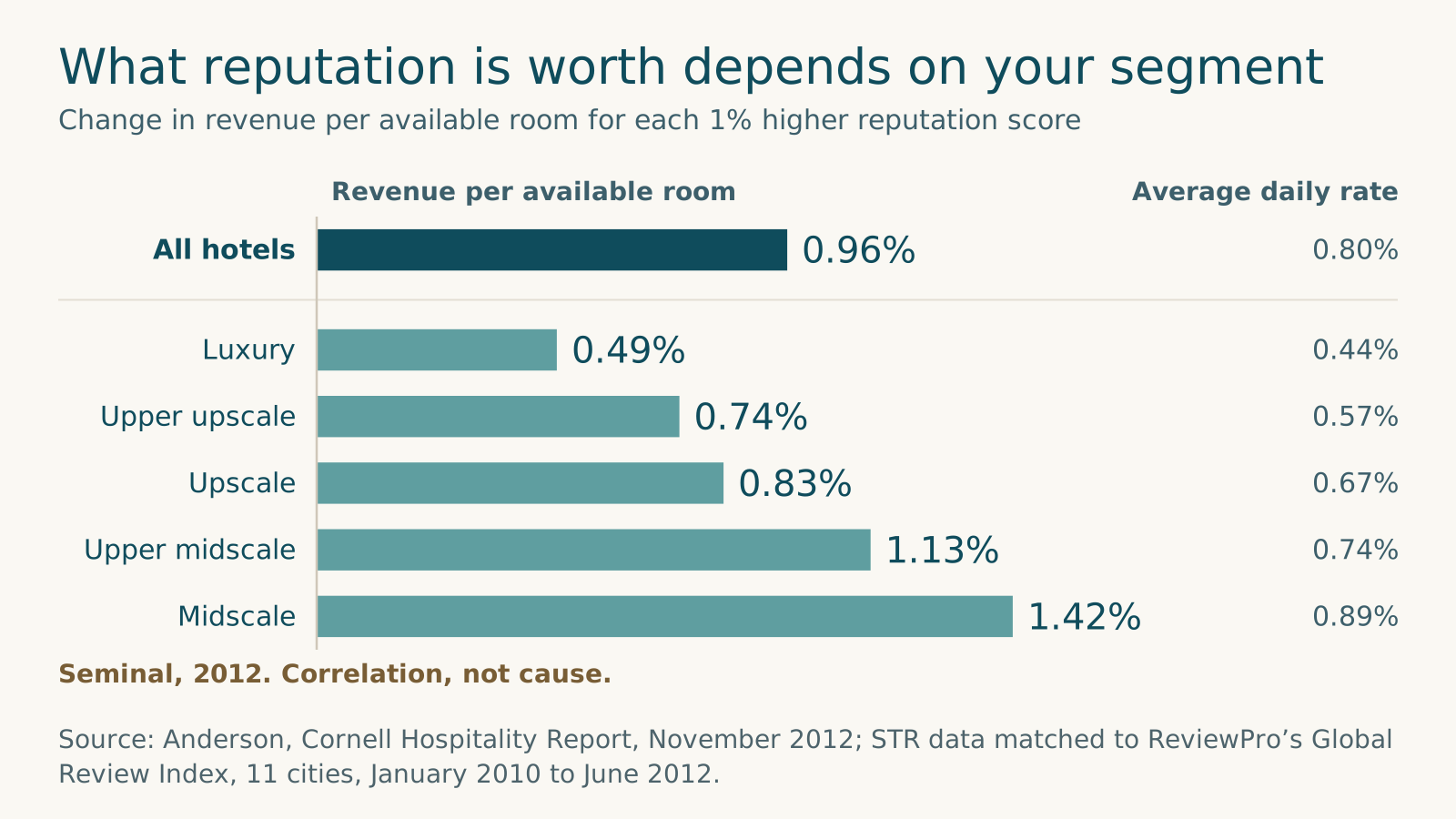
Figure 1. What reputation is worth depends on your segment. Source: Anderson, Cornell Hospitality Report, November 2012; STR data matched to ReviewPro’s Global Review Index, 11 cities, January 2010 to June 2012.
Newer work confirms the direction. A meta-analysis of 25 articles put the average elasticity of hotel performance to review ratings at 0.888, and to review volume at just 0.055 (Yang, Park and Hu, 2018). Another, pooling 163 estimates from 22 studies, put the median elasticity of room rates to ratings at 0.851 (Hu, Yang and Park, 2019). Its summary reports that value and room ratings mattered most for rates, while staff and cleanliness ratings were not significant. Performance moved almost in step with ratings, and the score mattered far more than the count.
A large US panel says reviews move demand, not price. Gregory Lewis of Microsoft Research and Georgios Zervas of Boston University followed 4,477 hotels in Arizona, California, Nevada, Oregon and Washington from 2005 to 2014, matching STR data to TripAdvisor, Hotels.com and Expedia ratings. Their October 2019 working paper finds that by 2014 "a hotel rated one star higher on all the platforms on average has 27.8% higher demand," while higher ratings had a "negligible" effect on pricing. The effect was "approximately equal to zero for ratings up until around 3.5 stars," then rose roughly in a straight line; the authors read this as guests treating every hotel below 3.5 stars as equally poor.
Anderson's price figures come from a correlation across hotels. Lewis and Zervas follow the same hotels for a decade and use a natural experiment to get closer to cause. Where they differ, read it as demand first, price power second.
What this means for a resort. Expect a better reputation to show up first in demand. Price power varies by segment, and the 2012 data shows it weakest at the luxury end. None of these studies names Google among its rating sources, and none isolates resorts. That is the retest the 11.2% still needs.
Reviews shrank the brand premium, and independents gain the most
Online reviews give an independent the quality signal a brand name used to supply. In Texas, chains' revenue premium over independents fell from 31.8% to just under 19.3% between 2000 and 2015, and in small markets from 25% to 6.9%. A better rating is also worth more to an independent than to a chain.
What the brand premium was worth. Hollenbeck, at UCLA, tracked 5,265 hotels in 548 Texas cities through state occupancy tax records from 2000 to 2015, alongside about 1.44 million TripAdvisor and Priceline reviews (Journal of Marketing Research, 2018). He put the average chain premium at 25.2% of RevPAR, roughly $170,000 a year for an 80-room property (the paper adjusts all revenue for inflation to a 2006 base). It fell "from 31.8% in 2000 to just under 19.3% in 2015," a decline he calls "at least partially due to information from online reputation mechanisms."
Small markets changed most. "For firms in small markets, the chain premium has fallen dramatically, from 25% to 6.9%," Hollenbeck writes. In denser urban areas "it has fallen only from 34.5% to 25.9%." His small markets have populations below 150,000 and sit more than 20 miles from a major population center. If that describes your resort's town, it is the line closest to your market.
Independents gain more per star. In the Lewis and Zervas panel, "the impact of review platforms is substantially larger for independent hotels than chains": an estimated 10.4% against 4.3% for a one-star increase in rating, measured on demand (occupancy adjusted for price). Hotels that practice revenue management stand to gain more too.
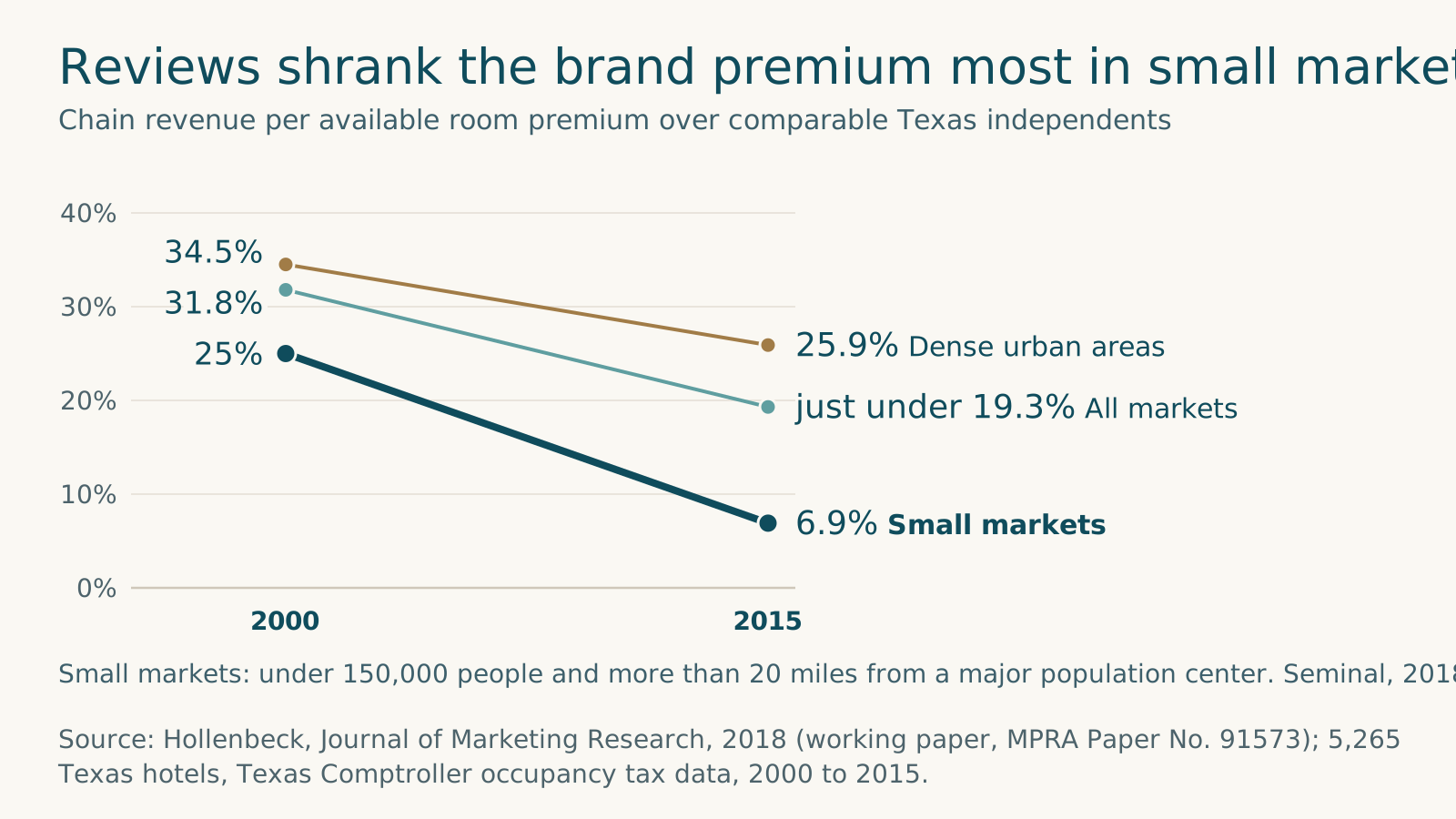
Figure 2. Reviews shrank the brand premium most in small markets. Source: Hollenbeck, Journal of Marketing Research, 2018 (working paper, MPRA Paper No. 91573); 5,265 Texas hotels, Texas Comptroller occupancy tax data, 2000 to 2015.
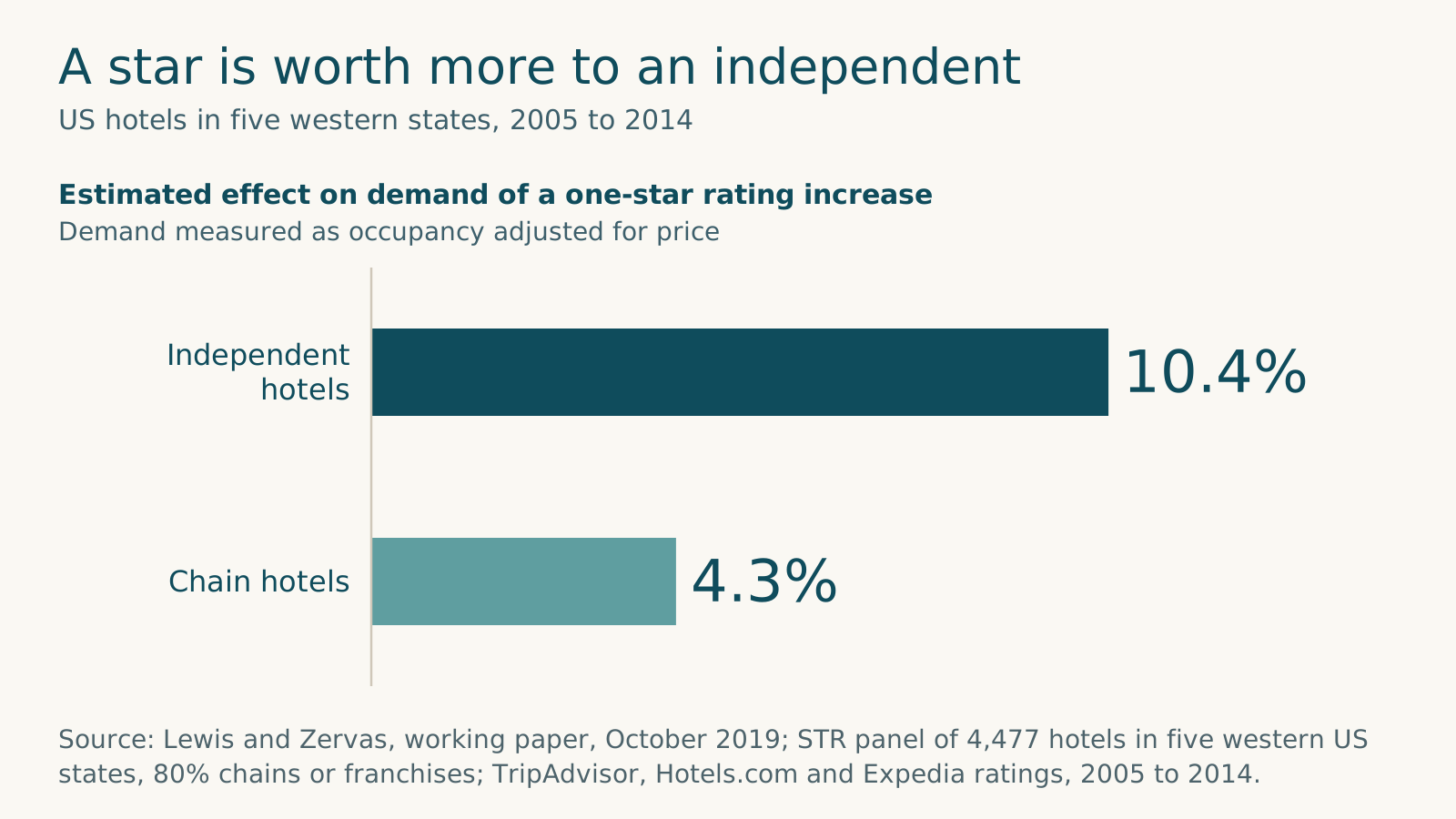
Figure 3. A star is worth more to an independent. Source: Lewis and Zervas, working paper, October 2019; STR panel of 4,477 hotels in five western US states, 80% chains or franchises; TripAdvisor, Hotels.com and Expedia ratings, 2005 to 2014.
Hotels already treat reviews as advertising. Across 5,563 Tripadvisor hotels from 2002 to 2015, an extra displayed half-star "causes hotels to spend about 7% less on advertising," and about 9% less for independents, though the chain and independent estimates were not statistically different (Hollenbeck, Moorthy and Proserpio, Marketing Science, 2019). For an owner deciding whether reputation is a marketing line or a revenue lever, it already behaves as both.
A small resort has a volume problem. No hotel study here says how many reviews it takes for a score to become stable. Early reviews skew negative and balance out as volume grows (Melián-González and colleagues, 2013, 16,680 hotels). In an experiment, "When the rating is good, the trust in the rating depends on the number of reviews" (Gavilán, Avello and Martínez-Navarro, 2018). And Hollenbeck finds low-quality independents "the most negatively affected by negative ratings and high variance in ratings." For a 40-room resort, a strong score on few reviews persuades less, and each poor review weighs more.
Better replies beat more replies
Replying to reviews helps, up to a point, and what a reply says matters more than how many you send or how fast. Cornell researchers found returns flatten at about a 40% response rate, yet hotels in one global benchmark answered 68.8% of reviews in 2025. Two major studies disagree about which reviews deserve a reply. Both find that copy-and-paste replies weaken the effect.
Starting to reply helps. Hotels that begin responding see "a 0.12-star increase in ratings and a 12% increase in review volume," and "fewer but longer negative reviews" (Proserpio and Zervas, Marketing Science, 2017). A 2016 study of 1,045 hotels and 10,793 replies found a management response brought "an average increase of 0.235 stars" (Xie and colleagues).
More is not better. Cornell's Center for Hospitality Research tested what happens when hotels respond to reviews on TripAdvisor. "After about a 40-percent response rate, hotels seem to reach a point of diminishing returns," its April 2016 report found, and too many responses did worse on ratings and revenue than none. Revenue was measured through click-throughs to OTA listings, and the public summary gives no sample size. Anderson's advice: "managers should focus on making constructive responses to negative reviews."
Hotels in Shiji's benchmark answered 68.8% of reviews in 2025, taking 3.5 days on average (more than 40 million reviews from 12,000 hotels, vendor data), and 67.2% in the second quarter of 2026. The sources may define response rate differently, so read this as direction, not a precise gap. Tripadvisor adds that "Management Responses are not factored into Popularity Ranking."
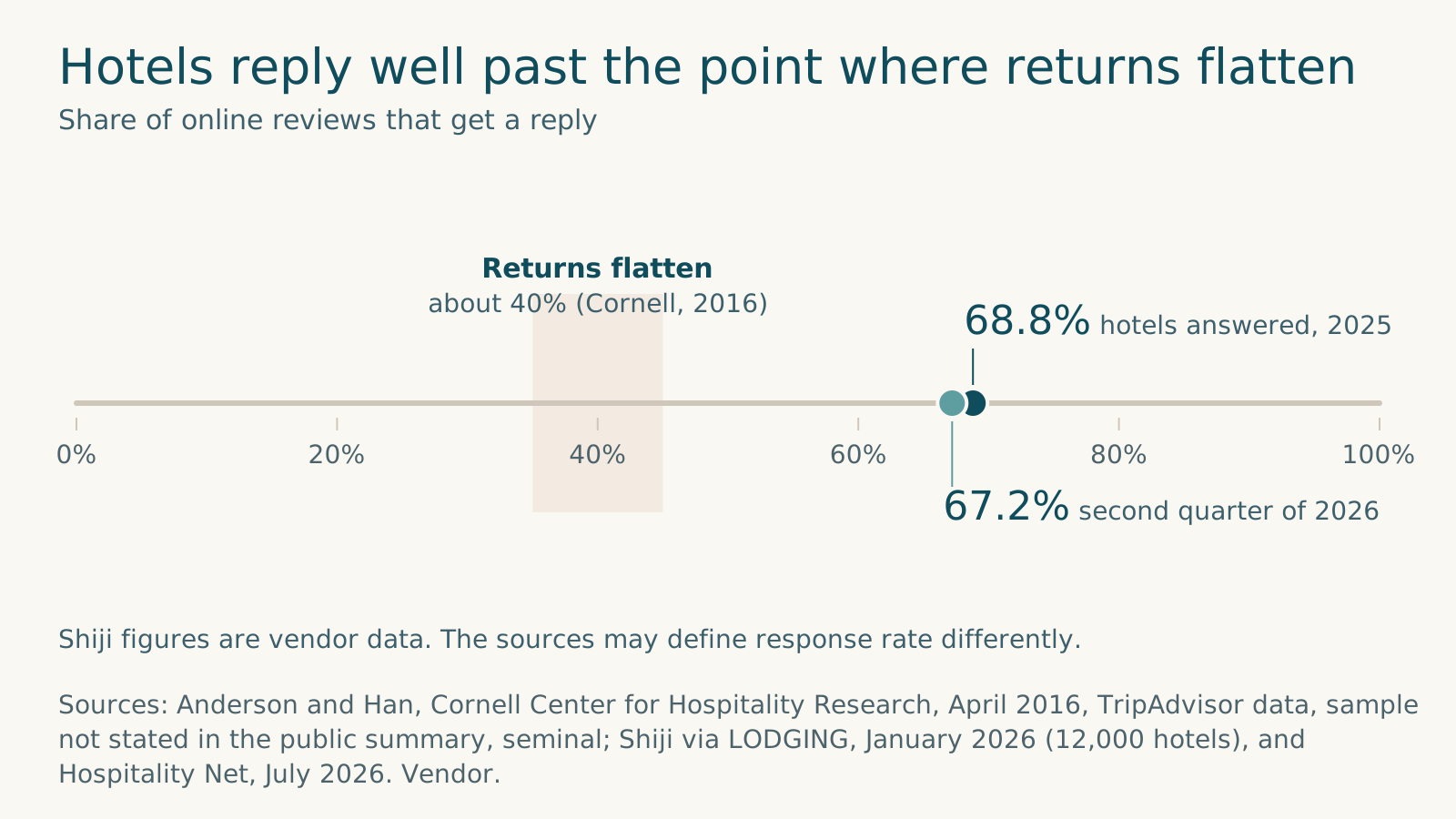
Figure 4. Hotels reply well past the point where returns flatten. Sources: Anderson and Han, Cornell Center for Hospitality Research, April 2016, TripAdvisor data, sample not stated in the public summary, seminal; Shiji via LODGING, January 2026 (12,000 hotels), and Hospitality Net, July 2026. Vendor.
Which reviews to answer: two studies disagree. Wang and Chaudhry (Journal of Marketing Research, 2018) found that visible replies to negative reviews "can significantly influence subsequent opinion in a positive way," while replies to positive reviews had the reverse effect. Wu, Ye and Chu (Journal of the Academy of Marketing Science, published online March 2024) studied more than 393,000 daily responses to 804,000 daily reviews on TripAdvisor and Expedia, against Texas revenue data from 2001 to 2016 (sample and data period via the University of Hong Kong's summary of the paper). Replies to positive reviews led "to an increase in subsequent customer review ratings and revenue." Replies to negative reviews cut ratings and revenue in the short run and improved them in the long run. In lab tests, answering negative reviews "increases subsequent negative reviews from dissatisfied customers" (via the same HKU summary).
Both are serious work on different data, and they do not reconcile. What they share is that over time, answering negative reviews helped. On positive reviews the evidence splits, so a reply there should earn its place.
Templated replies weaken the effect. Wu, Ye and Chu found effects weaken "among firms whose MRs contain highly similar content," where MRs are management responses. Wang and Chaudhry found that tailoring amplifies a reply's effect, in either direction. Google's own help page steers owners away from "sending the same 'thank you' to everyone."
Empathy showed an effect; speed did not. When 176 university students rated hypothetical replies to a negative review, "inserting an empathy statement in response to the negative review improved the ratings of the response," and the higher-rated replies "included a paraphrase of the complaint." Speed "did not influence the survey participants' rating of the response" (Min, Lim and Magnini, 2015). A 2019 study of returning hotel reviewers found "no significant difference in the effect of response speed," and longer, slightly less upbeat replies where the guest's next rating improved (Sheng and colleagues). Google advises a timely reply, which is good manners. In the studies we found, speed was not where the gain came from.
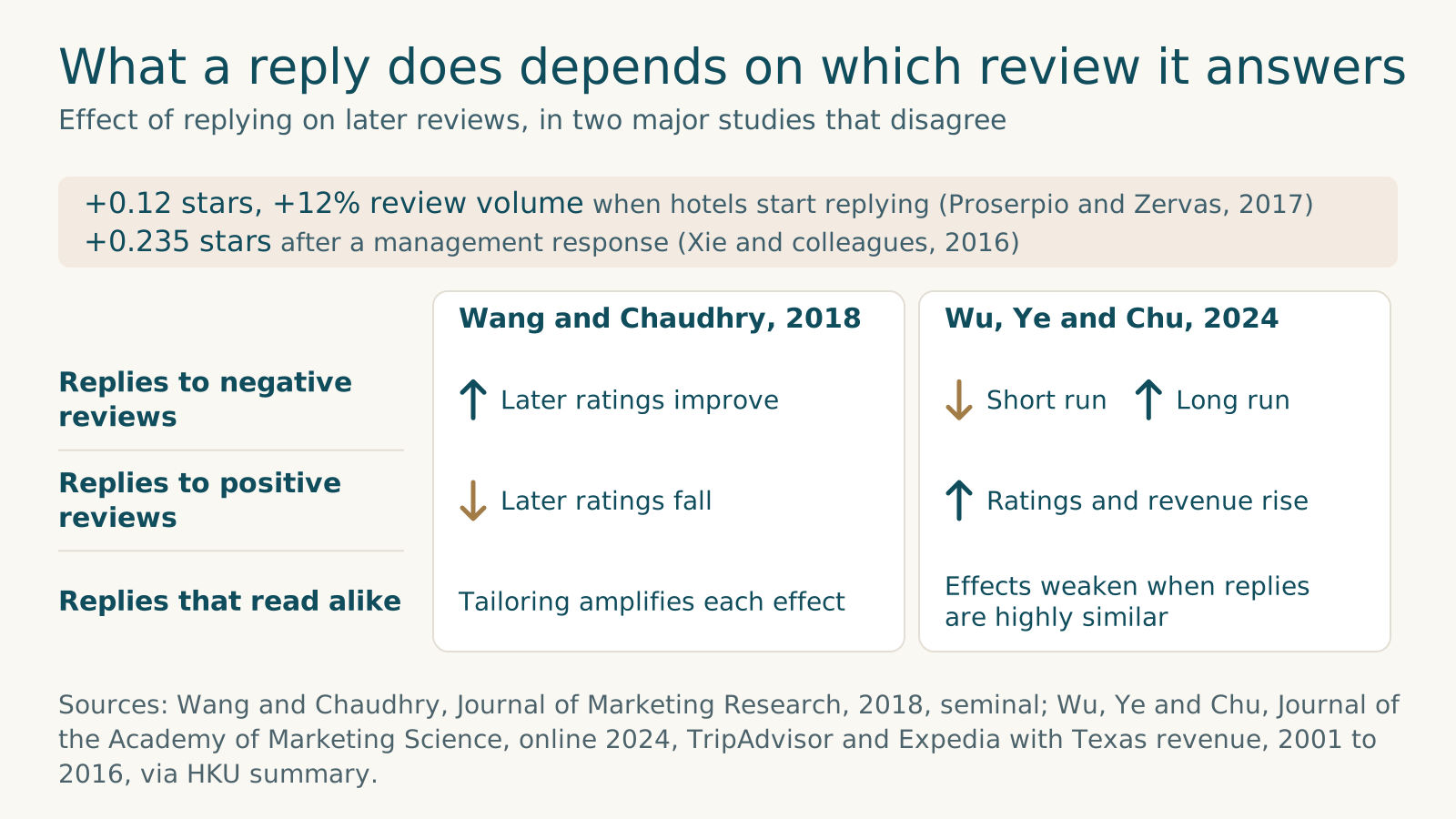
Figure 5. What a reply does depends on which review it answers. Sources: Wang and Chaudhry, Journal of Marketing Research, 2018, seminal; Wu, Ye and Chu, Journal of the Academy of Marketing Science, online 2024, TripAdvisor and Expedia with Texas revenue, 2001 to 2016, via HKU summary.
Four rules for replying to reviews
- Treat your response rate as a result, not a target. Cornell's 2016 work found returns flatten at about 40%, and hotels in Shiji's benchmark already answer 68.8% (2025, vendor). Decide which reviews get a reply, and why.
- Answer the negative reviews that describe a real problem. Over time, answering negative reviews helped in both major studies, even though the newest found a short-run dip.
- Write every reply for the review in front of it. Highly similar replies weaken the effect (Wu, Ye and Chu, 2024). On positive reviews the studies split, and tailoring is no fix there: in Wang and Chaudhry (2018), a tailored reply to a positive review made the negative effect bigger. A positive review does not need a reply.
- Spend the effort on empathy, not the stopwatch. Name the complaint in your own words, say why it mattered and say what you did. Empathy and paraphrasing improved how readers rated replies; speed showed no effect in the studies we found.
Recovery lifts satisfaction, but its effect on reviews is unmeasured
A problem during the stay is costly, and most guests say they would not report one. Fixing it lifts satisfaction, but across industries it has not reliably lifted loyalty or word of mouth. We found no published hotel study that shows whether a fix before checkout changes the review a guest posts, or whether they post at all.
What a problem costs. In J.D. Power's 2025 North America Hotel Guest Satisfaction Index Study, 12% of stays had a problem, and satisfaction fell 217 points on a 1,000-point scale, "to 460 from 677," when one occurred (39,219 branded-hotel guests, stays May 2024 to May 2025). The 2026 study gave no problem rates, and both cover branded hotels only.
Most guests say they would not report a problem. In a 2019 survey of more than 1,100 US consumers, "Only 25% of guests say they will report any issue that impacts their guest experience," and among those who don't report, 10% said it was because they would rather write a negative review (Zingle, now Medallia, vendor). Only one in five said they would post about a stay that "meets their expectations." And 42% said they would return to a hotel that turned a poor experience into a positive one. These are stated intentions, and we found nothing newer.
Recovery lifts satisfaction, not the rest. A 2007 meta-analysis of 24 studies tested the service recovery paradox, the idea that a well-handled failure can leave people happier than no failure at all. The effect was "significant and positive on satisfaction" but "nonsignificant on repurchase intentions, word-of-mouth, and corporate image" (de Matos, Henrique and Rossi, Journal of Service Research). The studies span industries, hotels among them, and come from before online reviews were common. They say nothing about posting.
Timing changes the review. A 2018 study of 1,022 London hotels found that "the sooner customers post a review the more they 'zoom-in' on their experience," and early reviews ran more negative. The authors still advise that managers "should aim to get reviewer feedback as soon as possible" (Stamolampros and Korfiatis, as reported by TravelDailyNews).
The open question. We found no published hotel study linking a problem fixed before checkout to the posted score or the posting rate, only vendor case studies with no stated method or sample. It is the question a resort's front desk most needs answered, and one a resort can start to answer from its own records (see Closing the review loop, below).
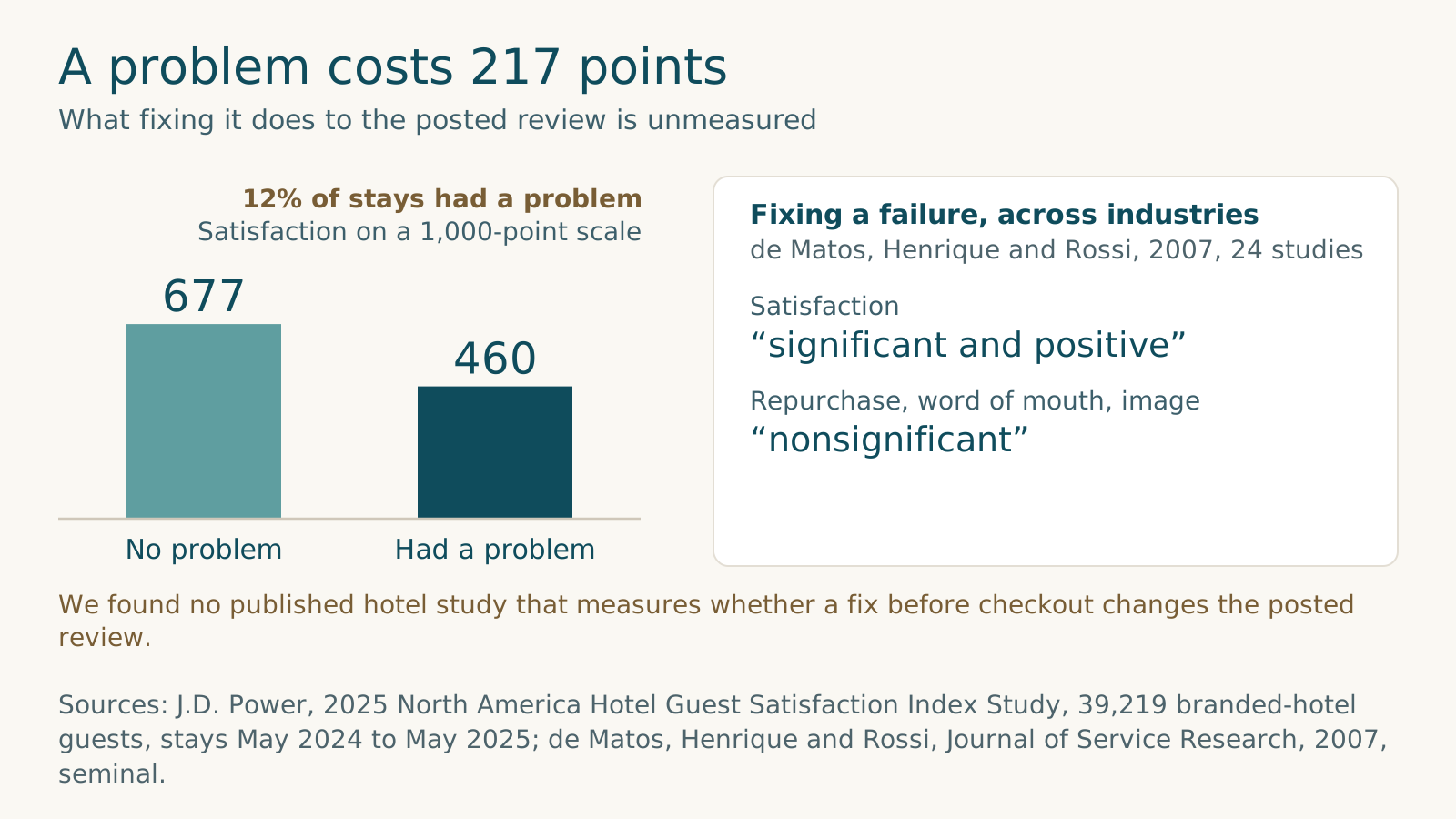
Figure 6. A problem costs 217 points. Sources: J.D. Power, 2025 North America Hotel Guest Satisfaction Index Study, 39,219 branded-hotel guests, stays May 2024 to May 2025; de Matos, Henrique and Rossi, Journal of Service Research, 2007, seminal.
Volume decides who gets seen, and the rules decide how to ask
Platforms rank on how recent and how numerous your reviews are, not only on the score, and artificial intelligence (AI) assistants appear to reward a large review count more than a perfect rating. So the most useful review habit is asking every guest. The rules on asking are strict: Google and Tripadvisor ban incentives and selective requests, and the FTC rule carries penalties of up to $53,088 per violation.
Platforms rank on more than score. Tripadvisor's Popularity Ranking "is based on the quality, recency and quantity of reviews," though "Just having more reviews doesn't mean that a business will be ranked higher than its competitors." Expedia's sort order weighs "Guest review scores and number of reviews" alongside price, past bookings and what Expedia is paid. Booking.com's Charlotte Munro told Shiji in a 2023 interview that review score is "definitely not one of the big ones" in ranking (vendor blog). None publishes a score cutoff for placement.
Google is where review volume is growing. Google review volume grew 15.7% in 2025, against 2.1% for all reviews (Shiji, 12,000 hotels, vendor). In North America in the third quarter of 2025, Expedia carried 40% of review volume in Shiji's sample and Google 23%, up 4.7 points (Shiji, vendor).
Guests look for recent reviews. In a 2019 Tripadvisor survey of 23,292 users in 12 markets, 81% always or frequently read reviews before booking a stay, and recent content mattered most (platform-sponsored). In 2026, 74% of US consumers said they seek reviews from the last three months (BrightLocal, all local businesses, vendor).
AI assistants appear to reward volume over score. Generative AI platforms such as ChatGPT reached 33% usage for trip research among US travelers, and summarized reviews were the second strongest trigger to act on an AI recommendation, at 33%, after price comparisons at 44% (Phocuswright, July 2026; base not stated on the public page).
In a vendor test, Local Falcon ran "near me" hotel searches around 998 US hotels on ChatGPT, Gemini, Google AI Mode, AI Overviews and Google Maps (published September 2026; search dates not stated). ChatGPT named 83.8% of hotels with 2,500 or more Google reviews and 52.1% of those with fewer than 50. "Above 4.0, the share of hotels named stops rising." Independents and chains were named at almost the same rate, 63.7% against 63.4%. This is vendor research and it shows correlation only, for US searches, with just 34 hotels in the top volume band. For hotel performance, the 2018 meta-analysis cited earlier found the score mattered more than the count. For being named by an AI assistant, the count appears to matter more.
More guests will meet your reviews as a summary. In 2023, Tripadvisor began showing AI summaries on hotels with "a threshold number of English reviews in the past 12 months." Booking.com said in October 2024 it was testing review summaries, and Expedia said it uses generative AI to summarize reviews (Hotel Dive, November 2024).
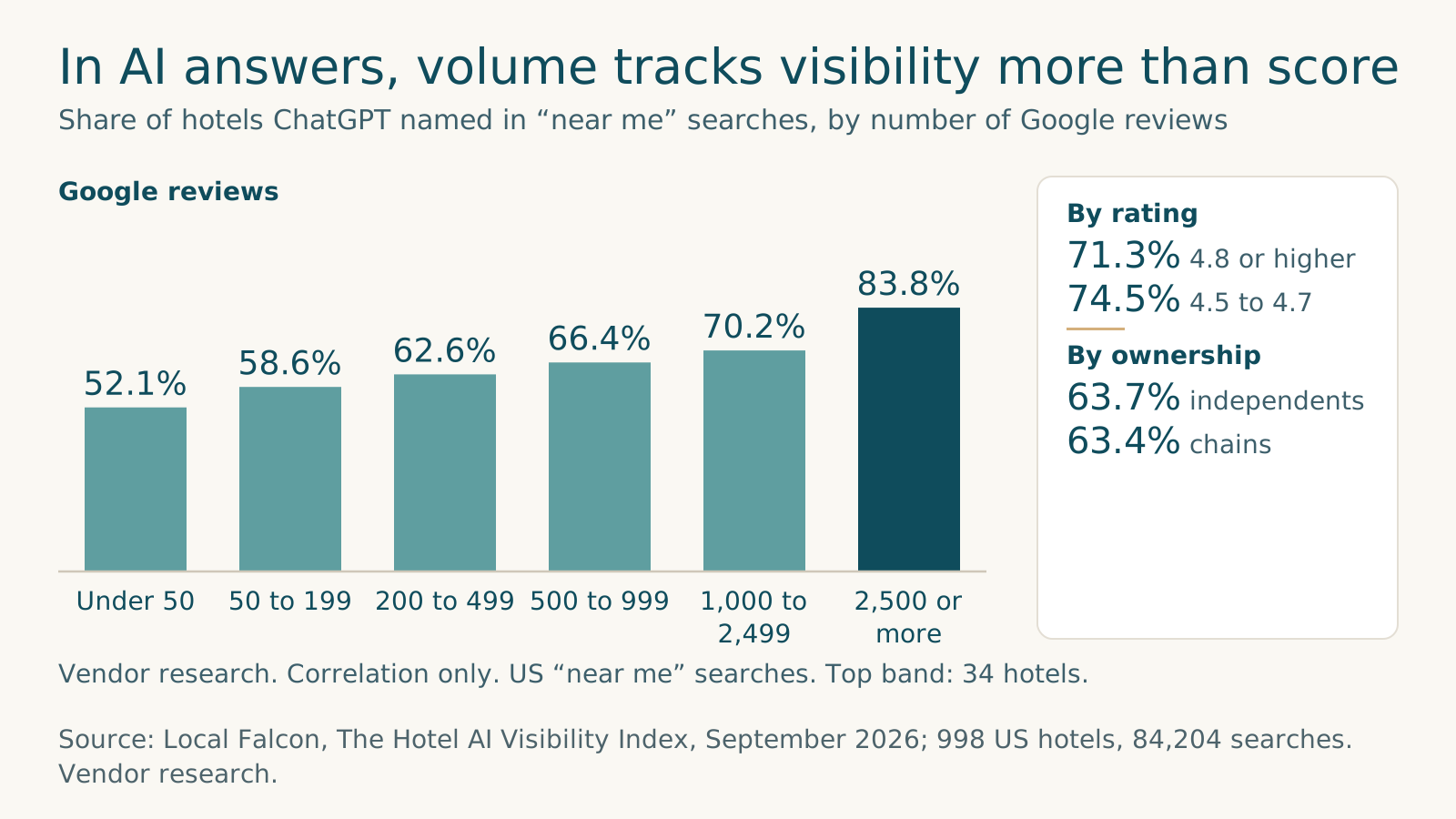
Figure 7. In AI answers, volume tracks visibility more than score. Source: Local Falcon, The Hotel AI Visibility Index, September 2026; 998 US hotels, 84,204 searches. Vendor research.
What the rules allow. This is general information, not legal advice.
The FTC sets the floor. The FTC rule on consumer reviews "became fully effective on October 21, 2024." In the FTC's summary, it bans, among other things, fake reviews, buying reviews of a particular sentiment, undisclosed insider reviews and review suppression, which includes "unfounded or groundless legal threats." A court can impose up to $53,088 per violation, a figure the FTC adjusts each year. Its 2022 guidance adds: "Don't ask for reviews only from customers you think will leave positive ones." Any incentive must not depend on a positive review and should be disclosed. And "Don't ask your staff to write reviews of your business."
Google and Tripadvisor go further. Google's content policy prohibits businesses that "Discourage or prohibit negative reviews, or selectively solicit positive reviews from customers," and bans incentives "in exchange for posting any review." Asking guests to "visit a Google link or scan a QR code" is fine. Tripadvisor bans "directing a guest to one review page if they indicate a positive experience but directing them to another path," which rules out the survey-first funnel that sends only happy guests to a review site. It bars rewards for any review, whatever the rating, and "incentives designed to reward employees for encouraging reviews," with penalties that include "ranking penalties, red badges." Its guidelines also bar reviews "from anyone who owns, is employed by, or is affiliated with the reviewed property." In 2024 it removed 360,000 reviews linked to employee incentive programs (Tripadvisor, March 2025, all categories, platform self-report).
In the European Union (EU), showing reviews carries duties. Since May 28, 2022, Directive (EU) 2019/2161 treats as material information "whether and how the trader ensures that the published reviews" come from real guests, wherever a business displays reviews itself, its own website included. It bans claiming they do "without taking reasonable and proportionate steps to check," and bans commissioning false consumer reviews. National rules vary.
The safe practice is also the simplest: ask every guest, the same way, with nothing attached, and never send only the happy ones to a review site.
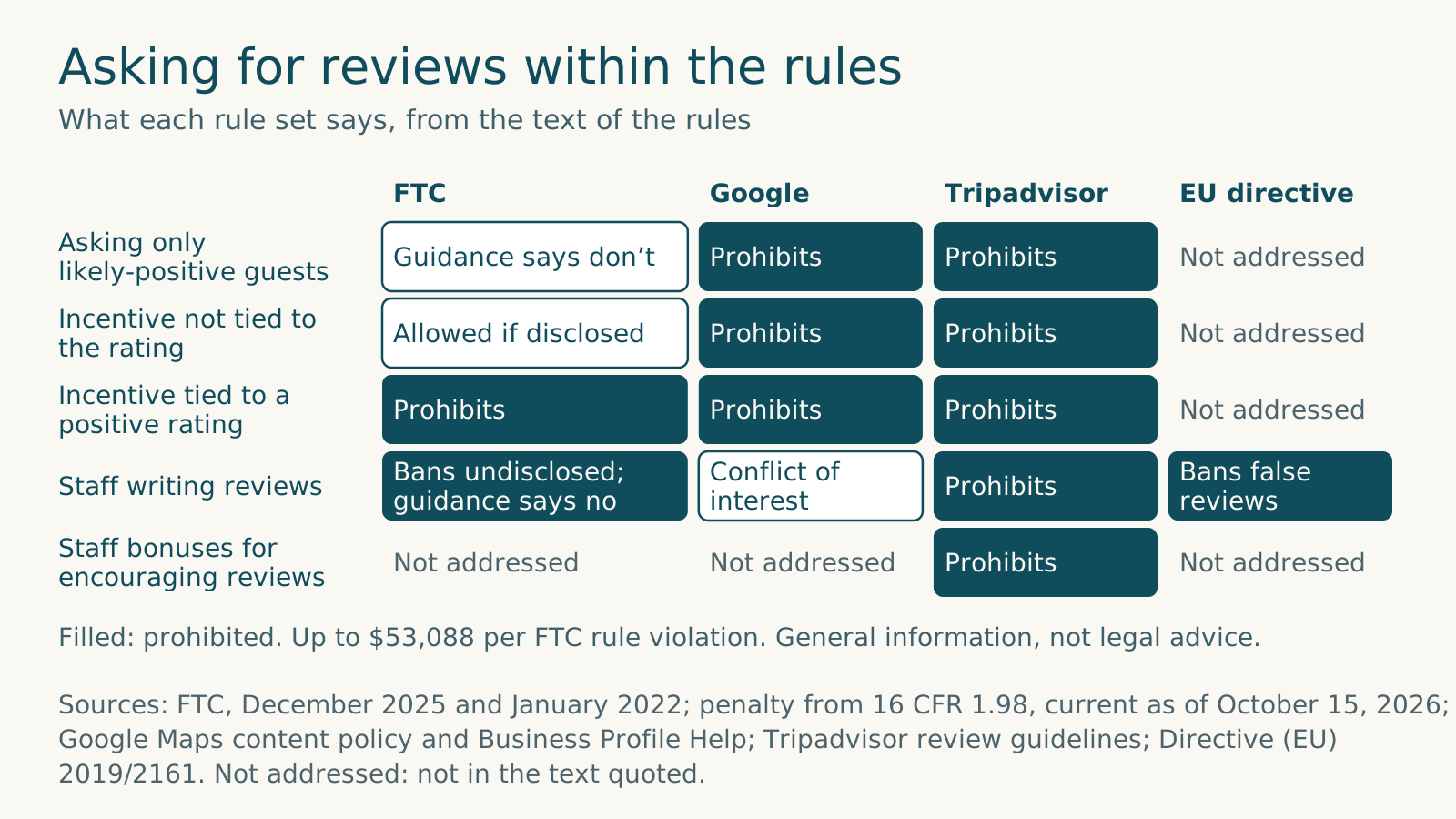
Figure 8. Asking for reviews within the rules. Sources: FTC, December 2025 and January 2022; penalty from 16 CFR 1.98, current as of October 15, 2026; Google Maps content policy and Business Profile Help; Tripadvisor review guidelines; Directive (EU) 2019/2161. Not addressed: not in the text quoted.
Closing the review loop
The evidence supports a routine, not a sprint. Ask every guest the same way. Catch problems while the guest is still on property. Reply where a reply adds something, in words written for that review, and track the few numbers that tie reviews to revenue.
What to tell the owner. Demand rose with ratings above about 3.5 stars (Lewis and Zervas, 2019), RevPAR moved almost in step with reputation across all hotels (Anderson, 2012), and hotels spent less on advertising as displayed ratings rose (Hollenbeck, Moorthy and Proserpio, 2019). The chain premium, roughly $170,000 a year for an 80-room property in Hollenbeck's estimate (2018; revenue adjusted to a 2006 base), has been shrinking partly because of reviews. Don't promise the owner 11.2%. Promise a routine and a way to measure what it does.
A review routine for a 40 to 400 room resort
| When | What to do | What it rests on |
|---|---|---|
| Every stay | Make it easy to report a problem, fix it, and check back that it was fixed | Only 25% of guests say they will report any issue (Zingle, 2019, vendor); a problem cost 217 points of satisfaction (J.D. Power, 2025) |
| Every checkout | Ask every guest for a review the same way, with a direct link or QR code, no reward and no screening question first | Google allows links and QR codes; Google and Tripadvisor ban selective requests and incentives |
| Every week | Read every new review. Answer negative reviews that describe a real problem, specifically and with empathy. Positive reviews do not need a reply, since the studies split on them | Cornell, 2016; Wang and Chaudhry, 2018; Wu, Ye and Chu, 2024; Min, Lim and Magnini, 2015 |
| Every month | Count new reviews by platform, response rate and templated replies; route recurring complaints to the department that owns them | Tripadvisor ranks on "quality, recency and quantity"; value and room ratings mattered most for rates (Hu, Yang and Park, 2019) |
| Every quarter | Set displayed scores by platform beside your own occupancy and ADR trend; ask two AI assistants for the best hotels near you | Lewis and Zervas, 2019; Local Falcon, 2026 (vendor) |
| Every year | Check every review request, survey flow and staff incentive plan against the platform rules | Tripadvisor bans staff review bonuses; 360,000 removals linked to employee incentives in 2024 |
For a small resort, volume comes first. A strong score on few reviews persuades less, and the AI test named far more of the hotels with large review counts. Asking every guest is the part of reputation a small property fully controls.
Measure the open question yourself. Tag each stay as no problem, problem fixed before checkout, or problem not fixed. Each quarter, where a review can be matched to a stay, compare which guests posted and what score they gave. A 40-room resort will need many months before the groups are large enough to read, and the result describes your property, not the industry. It still answers a question the published research has not.
Self-check
How hard are your reviews working?
Seven quick questions drawn from the review audit in this report. It takes about a minute, and nothing you enter is saved.
- How often do new reviews arrive on each platform where you sell rooms?
- What score does each of your main platforms display?
- Which reviews get a reply?
- Could your recent replies be pasted under a different review without changing a word?
- Do your replies to negative reviews name the complaint and show empathy?
- How do you ask guests for reviews?
- Ask two AI assistants for the best hotels near you. Do you appear?
Test your own property: the one-hour review audit
You can run this in about an hour from your own public review profiles and a spreadsheet. The checks mirror the studies in this report, so your numbers sit next to their benchmarks.
Before you start. Open every platform where your property has a listing, at least Google, Tripadvisor, Booking.com and Expedia, and work from the last 12 months.
1. Count volume and recency by platform (10 minutes). For each platform, note reviews posted in the last 12 months, reviews posted in the last three months, the date of the newest review and the score displayed.
2. Work out your response rate (10 minutes). For each platform, divide reviews with a management reply by all reviews, over the last 12 months or your last 50 reviews, whichever is fewer. Note whether replies went to all reviews, mostly positive, mostly negative or a mix.
3. Check for templated replies (10 minutes). Read your last 20 replies. Mark any that could be pasted under a different review without changing a word.
4. Read how you answer negative reviews (15 minutes). Take your five most recent low-rated reviews. For each reply, check whether it names the specific complaint, includes a statement of empathy, says what changed, and avoids arguing or threatening.
5. Map every way you ask for reviews (10 minutes). List each one: checkout email, post-stay survey, QR cards, texts, staff asking at the desk. For each, ask: does every guest get the same request? Does any route ask how the stay went, then send only happy guests to a review site? Is anything offered in exchange, to guests or staff? Has anyone who works for you posted a review?
6. Ask two AI assistants (5 minutes). From your phone, near the property, ask two assistants such as ChatGPT and Gemini for the best hotels near you. Note whether you appear and which review sites they cite.
The printable audit sheet in the PDF sets each check beside its published benchmark, with a box to tick.
Fix any failure on request practice first; it is where platform penalties and the FTC rule apply. Then run the audit again in three months, and on two or three competitors in your market.
The full report
Reviews Are Revenue
What the research says, in the researchers' own words
The lines below come straight from the studies, releases and platform policies behind this report, quoted exactly as published on the page named.
On who gains most. "independent hotels stand to gain more from online reputation than chains, as do hotels that practice revenue management." Lewis and Zervas, abstract of their working paper dated October 14, 2019.
On how many replies. "making too many responses is worse than offering no response at all, in terms of both ratings and revenue." Cornell Center for Hospitality Research release on Anderson and Han's study, via Hospitality Net, April 19, 2016.
For balance, on replying to negative reviews. The ratio of replies to negative reviews "results in a decrease in customer review ratings and revenue in the short run" but "contributes to improvements in these metrics in the long run." Wu, Ye and Chu, Journal of the Academy of Marketing Science, published online March 1, 2024.
On why replies change the next review. "It is almost like someone is looking behind your shoulder when you are writing a negative review." Zervas, co-author of Proserpio and Zervas, Marketing Science, 2017, quoted in an INFORMS news release, September 8, 2017.
On rewards for reviews. "It is against our guidelines to offer or promise anything in exchange for any reviews, irrespective of rating." Tripadvisor, Trust and safety review posting guidelines (undated page, read October 2026).
How we built this report
This edition is a synthesis of published evidence.
What we looked for. Studies linking review ratings to hotel demand, price and revenue; research on replies and service recovery; platform and government rules on asking for reviews; and recent work on how AI assistants use reviews. We preferred work from 2022 to 2026 and kept older studies where they remain the best evidence. Those carry their year.
How we checked it. Each figure was taken from a source page that was opened and read, not from a search result, and then checked again in a separate pass by a checker who had no hand in writing the report. That pass rechecked each figure and quote against its source. Where a figure was read in a republication or summary rather than the original, the sentence or the Sources entry says "via" and names that page. We dropped widely repeated claims we could not trace to a primary source, including common statistics on how many travelers read reviews and rating thresholds said to govern placement on booking sites.
How to read it.
- Vendor data is labeled. Shiji, Local Falcon, BrightLocal and Zingle are technology vendors, and Tripadvisor's survey is platform-sponsored. Their data is real, but it describes their clients, users or chosen samples.
- No study here isolates independent resorts with 40 to 400 rooms. The samples come mostly from Texas, the western US, major US and European cities and London, with some US-wide and global samples, and the western US panel was 80% chains or franchises.
- The revenue studies use OTA and Tripadvisor ratings, mostly from 2000 to 2016. None names Google among its rating sources.
- Measures differ. Some studies report elasticities (the percent change that goes with a 1% change), some an effect per point, some per star. We report each as published and never convert one into another.
- Cornell and Shiji may define response rate differently, and two major studies disagree on replies to positive and negative reviews. We show both.
- The AI visibility evidence is one vendor study of US "near me" searches. It shows correlation, not cause.
- Gaps remain. We found no hotel study that measures whether in-stay recovery changes posted reviews, or how many reviews it takes for a hotel's score to become stable.
Sponsor. This report is published by ResortConcierge AI, which makes guest communication software for independent resorts. The product appears only in the About section and the closing invitation.
About ResortConcierge AI
Independent resorts lose guests in the gap between a question and an answer, usually when the desk is busiest or empty. ResortConcierge AI is an AI concierge built for those properties: it helps answer routine guest questions, routes service requests to the right team and flags unhappy guests early, all in one shared inbox, so staff can spend their time on the guests in front of them.
Want to know how your reviews are working?
We’ll run the one-hour review audit from this report on your property’s public review profiles, privately and free, and walk you through the results in 20 minutes.
Get the next report first
ResortConcierge AI Research publishes on the operating questions independent resorts ask most. One email when each report is out.
More from the series
Frequently asked questions
How much is a better review score worth to a hotel?
There is no single number. In a 2012 Cornell study, a 1% higher online reputation index went with 0.96% higher revenue per available room across all hotels, from 0.49% for luxury to 1.42% for midscale. A 2019 working paper found that a hotel rated one star higher across platforms had 27.8% higher demand by 2014, with a negligible effect on price.
Where does the 11.2% figure come from?
It is one worked example in a 2012 Cornell report: with Travelocity bookings from July 2012, a hotel priced at its same-star competitors’ $100 average could raise its price about 11.2% if its review score rose from 3.3 to 4.3 and keep the same chance of being booked. It measures the chance of being booked on one site, not occupancy.
Do online reviews matter more for independent hotels?
In the studies we found, yes. A one-star rating increase was estimated to raise demand 10.4% for independents against 4.3% for chains (Lewis and Zervas, 2019), and chains’ revenue premium over independents in small Texas markets fell from 25% to 6.9% between 2000 and 2015, a decline Hollenbeck ties at least partly to online reviews (2018).
Should hotels respond to every online review?
The evidence says no. Cornell researchers found returns flatten at about a 40% response rate, and too many responses did worse than none (2016). Two major studies disagree about replying to positive reviews, but in both, answering negative reviews helped over time, and highly similar replies weakened the effect.
Can hotels offer incentives for reviews?
Google and Tripadvisor ban incentives for any review, whatever the rating, and both prohibit asking only guests who are likely to be positive. The FTC rule on consumer reviews bans incentives tied to a positive review, with penalties of up to $53,088 per violation. This is general information, not legal advice.
Do AI assistants favor hotels with more reviews?
In a vendor test of 998 US hotels, ChatGPT named 83.8% of hotels with 2,500 or more Google reviews and 52.1% of those with fewer than 50, and the share named stopped rising above a 4.0 rating (Local Falcon, September 2026). It shows correlation only.
Is this report based on independent resorts only?
No. No study in this report isolates independent resorts with 40 to 400 rooms. The revenue studies use online travel agency and Tripadvisor ratings from 2000 to 2016, mostly in US cities and Texas towns, alongside platform rules and labeled vendor benchmarks.
Sources
All pages opened October 17 and 18, 2026. Vendor means the publisher sells hospitality, marketing or communications technology.
- Booking Holdings, Booking.com enhances travel planning with new AI-powered features, October 2024 (platform announcement)
- BrightLocal, Local Consumer Review Survey 2026, February 2026, 1,002 US adults, all local businesses (vendor)
- Cornell Center for Hospitality Research (Anderson), The Impact of Social Media on Lodging Performance, Cornell Hospitality Report Vol. 12, No. 15, November 2012, 13,341 Travelocity reservations and STR data for 11 cities (academic; record at Cornell eCommons)
- Cornell Center for Hospitality Research (Anderson and Han), Hotel Performance Impact of Socially Engaging with Consumers, April 2016, with the CHR release via Hospitality Net, April 19, 2016, the source of the "in terms of both ratings and revenue" quote, TripAdvisor and Revinate data (academic)
- de Matos, Henrique and Rossi, Service Recovery Paradox: A Meta-Analysis, Journal of Service Research 10(1), August 2007, meta-analysis of 24 studies (academic)
- European Union, Directive (EU) 2019/2161, November 2019, applies from May 28, 2022 (law)
- Expedia, Sort order information, undated, read October 2026 (platform policy)
- Federal Trade Commission, Fake review warning letter template, December 2025, and Soliciting and Paying for Online Reviews: A Guide for Marketers, January 2022 (government)
- Federal Trade Commission, FTC Publishes Inflation-Adjusted Civil Penalty Amounts for 2025, February 2025 (amounts effective January 17, 2025), and Electronic Code of Federal Regulations, 16 CFR 1.98, current as of October 15, 2026 (government)
- Gavilán, Avello and Martínez-Navarro, The influence of online ratings and reviews on hotel booking consideration, Tourism Management 66, 2018, experiment (academic, abstract)
- Google, Tips to get more reviews, Google Business Profile Help, undated (platform policy)
- Google, Prohibited & restricted content, Google Maps User Generated Content Policy, undated (platform policy)
- Hollenbeck, Online Reputation Mechanisms and the Decreasing Value of Chain Affiliation, Journal of Marketing Research 55(5), working paper version, MPRA Paper No. 91573, October 2018, 5,265 Texas hotels (academic; journal record)
- Hollenbeck, Moorthy and Proserpio, Advertising Strategy in the Presence of Reviews: an Empirical Analysis, Marketing Science 38(5), 2019 (linked file is the working paper version dated May 25, 2019; journal details not shown on it), 5,563 hotels (academic)
- Hotel Dive, Expedia Group boosts app user experience, loyalty offerings, November 2024 (editorial, secondary)
- Hu, Yang and Park, International Journal of Contemporary Hospitality Management 31(12), December 2019, 163 estimates from 22 studies (academic)
- J.D. Power, 2025 North America Hotel Guest Satisfaction Index Study, July 2025, 39,219 branded-hotel guests, and 2026 study, July 2026, 44,787 guests (independent research)
- Lewis (Microsoft Research) and Zervas (Boston University), The Supply and Demand Effects of Review Platforms, working paper dated October 14, 2019, 4,477 hotels in five western US states (academic, working paper)
- Local Falcon, The Hotel AI Visibility Index, September 2026, 998 US hotels (vendor)
- Melián-González, Bulchand-Gidumal and González López-Valcárcel, Online Customer Reviews of Hotels: As Participation Increases, Better Evaluation Is Obtained, Cornell Hospitality Quarterly 54(3), 2013, 16,680 hotels (academic, abstract)
- Min, Lim and Magnini, Cornell Hospitality Quarterly 56(2), May 2015, 176 students (academic)
- Phocuswright, AI sure hits its stride: 5 takeaways for travel leaders, July 2026, US travelers, sample not stated (independent research)
- Proserpio and Zervas, Marketing Science 36(5), SSRN version, September 2017, with INFORMS news release (academic)
- Sheng, Amankwah-Amoah, Wang and Khan, Managerial responses to online reviews: a text analytics approach, British Journal of Management 30(2), May 2019 (academic)
- Shiji via Hospitality Net, Defying the Peak: How Global Hotels Sustained Guest Satisfaction in Q3 2025, October 2025, and Q2 2026 guest experience benchmark, July 2026 (vendor)
- Shiji via LODGING, Shiji report finds growth in global guest satisfaction, January 2026, more than 40 million reviews from 12,000 hotels (vendor)
- Shiji Insights, 9 Questions To Help You Learn About Booking.com, April 2023, interview with a Booking.com employee (vendor)
- Stamolampros and Korfiatis via TravelDailyNews, Study reveals psychological influences in online reviews, October 2018, 1,022 London hotels (academic, secondary)
- Tripadvisor, Online reviews remain a trusted source of information when booking trips, July 2019, 23,292 users in 12 markets (platform-sponsored)
- Tripadvisor, 2025 Transparency Report release, March 2025, all categories (platform self-report)
- Tripadvisor, Everything You Need to Know About the Tripadvisor Popularity Ranking, undated (platform policy)
- Tripadvisor, Trust and safety review posting guidelines, undated (platform policy)
- Tripadvisor via Hospitality Net, AI-generated hotel review summaries, October 2023 (platform announcement)
- University of Hong Kong (HKU), summary of Wu, Ye and Chu's study, October 15, 2024, source of the 393,000 responses and 804,000 daily reviews, the August 2001 to December 2016 data period and the lab-test quote (academic, secondary)
- Wang and Chaudhry, When and how Managers' Responses to Online Reviews Affect Subsequent Reviews, Journal of Marketing Research 55(2), April 2018 (academic)
- Wu, Ye and Chu, Journal of the Academy of Marketing Science 54(1), online March 2024, February 2026 issue; sample read via the HKU summary above (academic)
- Xie, Zhang, Zhang, Singh and Lee, Effects of managerial response on consumer eWOM and hotel performance: Evidence from TripAdvisor, International Journal of Contemporary Hospitality Management 28(9), September 2016, 1,045 hotels (academic)
- Yang, Park and Hu, Electronic word of mouth and hotel performance: a meta-analysis, Tourism Management 67, August 2018, 25 articles (academic)
- Zingle (now Medallia), Zingle's 2019 How Service & Recovery Affect the Guest Experience & Drive Business, 2019, more than 1,100 US consumers (vendor)